acompanhe a publicação regular de livros / follow the regular publication of books ⇒ ⇒ ⇒ ⇒ ⇒ ⇒ ⇒ ⇒ ⇒ ⇒ ⇒ ⇒ ⇒ ⇒ ⇒ ⇒ ⇒ ⇒ ⇒ ⇒ ⇒ ⇒ ⇒ ⇒ ⇒ ⇒⇒ ⇒ ⇒ ⇒ ⇒ ⇒ ⇒⇒ ⇒ ⇒ ⇒ on facebook
..
.
A Árvore da Liberdade. Mauricio Vieira. Ed. Gato Bravo, 2025. por / by Mauricio Vieira
(ano XII . no XV . 2025 )
Thus Spoke the Plant. Monica Galiano – North Atlantic Book, 2018.
(10 Anos . 10 Years. 2024 – 2025)
Ecofeminismos e o ecofeminismo da bruxa – cinema e ecologia. Ilda Teresa Castro e Asoka Miau House Productions, 2023. por Ilda Teresa Castro
(no. XIII . 2023-2024)
The Language of Plants – Science, Philosophy, Literature / A Linguagem das Plantas – Ciência, Filosofia, Literatura – Edit. Monica Gagliano, John C. Ryan, Patrícia Vieira, 2017. por / by Ilda Teresa Castro
(no. IX . 2017-18)
Enxertia . Michael Marder, 2016 / Grafting . Michael Marder, 2016. por / by Michael Marder
(no. VIII . 2016-17)
The Green Thread: Dialogues with the Vegetal World . Ed. Patrícia Vieira, Monica Gagliano, John Ryan
Politizando as Plantas / Politicizing Plants, 2015. por / by Patrícia Vieira
(no. VII . 2016)
Paisagens Sensoriais em Harold Pinter: Para um Estudo Ecocritico Sobre a Estética Simbolist . Graça P. Corrêa . 2011 / Sensory Landscapes in Harold Pinter: A Study in Ecocriticism and Symbolist Aesthetic . Graça P. Corrêa . 2011. por / by Graça P. Corrêa
(no. VI . 2015)
Música & Água – Evolução Provável de um Relacionamento Físico & Espiritual / Music & Water – Evolution of a Possible Physical & Spiritual Relationship. José Alberto Vasco, 2006. por/by José Alberto Vasco
(no.II . 2014)
.
.
A Árvore da Liberdade
Mauricio Vieira, 2025
.

por Mauricio Vieira
.
A figueira, no fim de tarde, ao ver aqueles vultos se aproximando, de início não entendeu. Acreditou que apenas iriam podar alguns galhos salientes. Estaria atrapalhando certa construção que os homens resolveram erguer no local onde anteriormente havia a casa? Podar dava forças para crescer de novo mais vigorosa na primavera. Voltaria a crescer o coro discreto e sussurrado de folhas e antefolhas, ramos e anterramos, raízes e mais raízes, que na semente prenunciava um largo tronco, uma copa sólida e a compreensão de todas as estações, até a derradeira, quando um vento muito forte erguesse suas raízes já cansadas ou um raio a fendesse ao meio, ou peste penetrasse sua casca ou sua folha e sua seiva escorresse espessa e doente, ácida e purulenta. Seu dia haveria de chegar.
Não, não estes machados, tantos, lâminas frias, que lhe decepavam daqui e dali. Parecia que haviam perdido a medida do que era o bastante. Já não precisava de tantas frestas, de tantas janelas. Em breve já não haveria casa para tantas janelas. Tudo agora era janela, mas sem moldura. O mundo era para ser visto com moldura. Este era o segredo que sempre desejara revelar aos homens, mas estes não paravam para ouvir. Construíam e destruíam suas casas sem mesmo olhar pelas janelas. Lembrou-se de quando era uma semente, que o solo havia aceitado e acolhido, ciente de que seria requisitado por anos a fio, nutrientes e água exigidos sem cessar; mas seria troca; o solo também haveria de ganhar algo na transação. Assim é que funcionava aquele comércio silencioso, a tempo integral e a longo prazo, solo e árvore, sob a bênção do sol, que regia o ambiente geral e aplicava a lei. Aos livres participantes daquele comércio, vermes, micróbios, fungos, pássaros e abelhas, mercadores itinerantes que espalhavam os acordos em outros solos, só podia ser grata. Agora somente ouvia-os ao longe, muito distantes, escondidos por trás dos flocos de neve, sentindo que a venerável figueira se desfazia em mil estilhaços, para fins que seriam inteiramente regidos pelas leis dos homens, por outro comércio, decerto menos favorável a alguns que dele participavam. Pelo que vira daquilo que faziam de suas habitações, que surgiam aqui, ora ali, ora se expandiam, para então queimarem na noite, não seria nobre o destino de sua matéria. Ela, com suas milhares de patas de dragão, suas centenas de invernos, sucumbia. Aceitou seu destino e fechou-se. Aos homens, somente uma seiva ruim e madeira empenada.
.
Esta passagem, do romance A Árvore da Liberdade (Gato Bravo, 2025), almeja transmitir o que seria a voz de uma figueira ao ser cortada. Esta árvore tem grande importância para o budismo. Sob uma figueira Sidarta atingiu a iluminação. Uma árvore destas é cortada sem qualquer cerimônia por membros do PCC. Este corte simboliza outro, por sua vez na sociedade chinesa, que é forçada a deixar para trás as tradições do budismo e do taoísmo, nas quais animais e plantas têm relevância, em prol de um sistema político igualitário entre humanos mas que ignora outras formas de vida. São visíveis atualmente as consequências deste corte na sociedade chinesa e também seu impacto no meio-ambiente.
Se na China o distanciamento entre humanos e não humanos é mais recente mas não menos profundo, no Ocidente, já prevalece há mais de dois milênios. Os filósofos gregos colocaram ao cimo de uma hierarquia os humanos, a seguir os animais ditos irracionais, e somente antes das pedras as plantas. O cristianismo apenas adicionou acima do homem a divindade e os anjos, mas não alterou o que estava sob o homem. Mesmo na era moderna, com a consolidação do método científico, continuou-se a pensar nestes outros seres como inferiores, reduzidos e catalogados sob o termo genérico natureza. É muito mais recente o pensamento que engloba o ser humano, os animais, as plantas, em redes de interdependência. Somente agora, tardiamente, voltamos a olhar para estes seres vivos como membros em uma cadeia de relações complexas e frágeis, das quais dependemos e negligenciamos em nosso próprio detrimento.
Para uma melhor compreensão destas relações, seria importante saber como estes outros seres se comunicam, mas é muito recente este campo de estudo. Nossa maneira de aproximação é inevitavelmente antropocêntrica. Quando tentamos interagir com algum ser vivo, damos-lhe voz humana. Nossos ancestrais o faziam. As fábulas são resquícios desta prática. Povos que residem e resistem em florestas ainda o fazem. Pedem perdão a plantas antes de colhê-las, e permissão aos animais antes de caçá-los, sempre em língua humana. Imaginam também em língua humana a resposta destes seres. Ao menos tenta-se imaginar a perspectiva de um outro ser vivo que está prestes a perder a vida.
Não sabemos se um dia conseguiremos desvendar as bases da comunicação animal e vegetal e conversar com elefantes, golfinhos, morcegos, quanto mais com as plantas. Enquanto isso, escritores e poetas dão voz a estes seres, de forma antropomórfica, mas com o intuito de transmitir ao leitor uma emoção compreensível. Afinal, qual é o ser vivo que não quer continuar a viver, e não lamenta ver-se abruptamente separado da vida?
*Mauricio Vieira (Santo André, 1978). Autor dos livros de poesia Manual Onírico de Jardinagem (Glaciar), As Mão Vazias (7Letras), dos romances A Árvore Oca (Motor) e A Árvore da Liberdade (Gato Bravo) e do infantil ilustrado Floresta (Raiz). Participou de diversos encontros literários no Brasil, em Portugal e na França. Organiza o ciclo internacional de leituras A Descoberta do Outro, edita a revista Arvoressências desde 2014 e anima as tertúlias Doidos Diversos e Ciranda.
Mauricio Vieira
.
A Árvore da Liberdade (The Liberty Tree)
Mauricio Vieira, 2025
.
by Mauricio Vieira
.
The fig tree, toward dusk, upon seeing those shadows approaching, initially did not understand. Perhaps they came to cut some salient branches? Were they a nuisance to the structure men decided to erect where once was a house? Paring a few branches gives strength, to grow more vigorously in the Spring. Would grow strong again the timid muttering choir of leaves and pre-leaves, boughs and ante-boughs, roots and more roots, which in the seed forecast a large trunk, a solid canopy and the grasp of all seasons, until the last one, when a very strong wind would lift its tired roots or a bolt would tear it in half, or a plague would penetrate its bark or its leaves and its sap would run thick and sick, acid and putrid. This day would come.
No, not these axes, so many, cold blades, hacking it here and there. It seemed they had lost their sense of measure of what was enough. It did not need so many gaps, so many windows. Soon there would be no house for so many windows. All was windows now, but without frames. The world should be seen from frames. This was the secret it had always wanted to reveal to humans, but these never stopped to listen. They built and destroyed their houses without even looking out from the windows. It recalled when it was a mere seed, which the soil had accepted and fostered, aware that it would be in demand year upon year, nutrients and water required with no respite; but it would be an exchange; the soil would also gain from the transaction. This is how this silent commerce ran, full time and for the long haul, soil and tree, under the blessing of the sun, who regulated methods and applied the law. To the free participants in this commerce, worms, microbes, fungi, birds and bees, itinerant merchants spreading deals in other soils, it could only thank them. It could now hear them, far, distant, hiding behind each snowflake, feeling that the venerable fig tree was being cut into a thousand splinters, to ends entirely regulated by the laws of humankind, another business, surely less favorable to some who participated in it. From what it could see from their abodes, sprouting here and there, expanding, to then burn in the night, it would not be noble, the destiny of its matter. With its thousands of dragon paws, hundreds of winters, it perished. Accepting its destiny, it shut itself. To men, only a bad sap and bent timber.
This passage from the novel A Arvore da Liberdade (The Liberty Tree), seeks to transmit what a fig tree would say as it is being cut down. This tree has great relevance to Buddhism. It was under a fig tree that Siddhartha found Buddha. That such a tree would be cut down without any second thought by members of the CCP symbolises another deep cut. Chinese society finds itself being forced to relinquish its ancient religious traditions, in which animals and plants have relevance, to adopt an egalitarian political system which ignores other forms of life. The consequences of this change are currently quite visible in Chinese society and also its profound impact on the environment.
If in China the detachment between humans and other beings is more recent but no less profound, in the Western world this separation prevails since at least two thousand years. Greek philosophers already had placed humans at the top of a hierarchy of beings, followed by so called irrational animals, and plants just before rocks. Christianism only added above humankind divinity and angels, but did not alter what was below. Even in the modern era, with the consolidation of scientific practices, these beings continued to be thought as inferior, reduced and catalogued under a generic term, nature. A break with this paradigm is much more recent, wherein animals, plants and humans live in chains of mutual dependency. Only now, belatedly, we turn our gaze toward these living beings as members in a chain of complet and fragile relations, on which we depend and neglect to our own loss.
For a better understanding of these relations, it would be crucial to know how these other living beings communicate, but this field of study is too recent. Our way to approach them is inevitably anthropocentric. When we try to interact with another being, we give them a human voice. Our ancestors did it. Fables are remnants of this practice. Those who live in forests still perform in this manner. They ask plants for forgiveness before pulling them out of the soil, and permission from animals before hunting them, always in human language. They also imagine in human language these beings’ responses. At least they attempt to imagine the perspective of someone who is about to lose its life.
We do not know if one day we will be able to decipher the bases of animal and vegetable communication, and be able to talk with elephants, dolphins, bats, much less with plants. Meanwhile, writers and poets give voice to these beings, in anthropomorphic fashion, but with the intent of transmitting to readers a comprehensible emotion. For what living being does not wish to go on living, and does not grieve upon being abruptly torn from life?
.
*Mauricio Vieira, a gardener of words, has lived in many places, but his true home is poetry. He is the author of Árvoressências and Manual Onírico de Jardinagem (poetry), A Árvore Oca (fiction), A Árvore da Liberdade (fiction) and Floresta (illustrated book). He has participated in many literary gatherings worldwide. He organizes the international reading cycle The Discovery of the Other and the poetry magazine Arvoressências, and hosts Doidos Diversos and Ciranda, literary gatherings in Lisbon, Portugal.
.
.
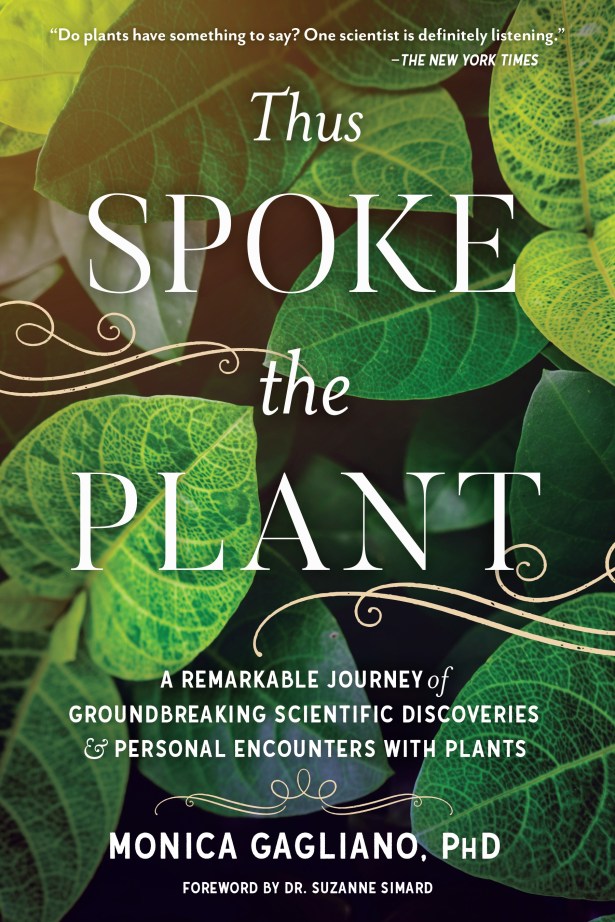
Thus Spoke the Plant
Monica Galiano
North Atlantic Book, 2018
contributor: Suzanne Simard
.
.
in Human Entities 2024: a cultura na era da inteligência artificial

Monica Gagliano 15 maio/may 2024 . 18.30 _
A consciência das plantas / Plant consciousness
Grande Auditório da Faculdade Belas Artes Lisboa
As descobertas científicas pioneiras de Monica Gagliano fornecem-nos provas poderosas de que as plantas possuem formas de inteligência. O seu livro, Thus Spoke the Plant, é uma “fitobiografia”, ou seja, uma coleção de histórias escritas em parceria com plantas, onde partilha relatos genuínos e em primeira mão da sua investigação sobre a comunicação e a cognição das plantas. A cognição das plantas é um novo e excitante campo de investigação que visa testar experimentalmente as capacidades cognitivas das plantas, incluindo a percepção, os processos de aprendizagem, a memória e a consciência. Este enquadramento emergente tem implicações consideráveis para a forma como percepcionamos as plantas, uma vez que redefine a fronteira tradicionalmente mantida entre animais e plantas. Os novos conceitos e perspectivas que emergem desta investigação sobre a vida vegetal estão a galvanizar um diálogo verdadeiramente interdisciplinar através de uma série de disciplinas académicas, incluindo a ciência, a filosofia, o direito ambiental, a literatura e as artes.
*Monica Gagliano PhD é uma investigadora internacionalmente premiada, selecionada pela Biohabitats como uma das 24 Mulheres Mais Inspiradoras da Ecologia, juntamente com Jane Goodall, Rachel Carson, Sylvia Earl e Terry Tempest Williams. Foi conferencista convidada nas mais prestigiadas universidades, incluindo UC Berkeley, Stanford, Harvard, Dartmouth e Georgetown. O seu trabalho pioneiro tem sido amplamente divulgado em meios de comunicação social proeminentes, como o The New York Times, Forbes, The New Yorker, The Guardian, National Geographic e muitos outros. Monica é Professora Associada de Investigação (Adjunta) de ecologia evolutiva na Austrália. Actualmente, é cientista-chefe do Kaiāulu|Coherence Lab, no Havai, e investigadora associada do Centro Takiwasi, no Peru.
Foi pioneira no novíssimo campo de investigação da bioacústica das plantas que, pela primeira vez, demonstra experimentalmente que as plantas emitem vozes e detectam e respondem aos sons do seu ambiente. O seu trabalho expandiu o conceito de cognição nas plantas. Ao demonstrar experimentalmente que a aprendizagem e a memória não são da exclusiva competência dos animais, Monica reacendeu o discurso sobre a subjectividade das plantas, bem como sobre o seu estatuto ético e jurídico. Inspirada por encontros com a Natureza e com anciãos indígenas de todo o mundo, Monica aplica uma abordagem inovadora e holística à ciência, que se sente à vontade para se envolver na interface entre áreas tão diversas como a ecologia, a física, o direito, a antropologia, a filosofia, a literatura, a música, as artes e a espiritualidade.
Ao reacender um sentimento de admiração pelo belo lugar a que chamamos casa, está a ajudar a criar uma nova ecologia da mente que inspira o aparecimento de soluções revolucionárias para as interações humanas com o mundo em que coabitamos.
Os estudos de Monica levaram-na a escrever numerosos artigos científicos e livros inovadores, incluindo Thus Spoke the Plant (2018) e The Mind of Plants (2021).
.
Monica Gagliano’s pioneering scientific discoveries provide us with powerful evidence that plants possess forms of intelligence. Her latest book, Thus Spoke the Plant, is a ‘phytobiography’, or collection of stories written in partnership with plants, where she shares genuine first-hand accounts from her research into plant communication and cognition. Inspired by encounters with nature and indigenous elders from around the world, she looks beyond mechanistic explanations, and presents the need for a more unified worldview – one where science and spiritually complement each other. Plant cognition is a new and exciting field of research directed at experimentally testing the cognitive abilities of plants, including perception, learning processes, memory and consciousness. The emerging framework holds considerable implications for the way we perceive plants as it redefines the traditionally held boundary between animals and plants. The novel concepts and perspectives emerging from this research on vegetal life are galvanising a truly interdisciplinary dialogue across an array of academic disciplines, including science, philosophy, environmental law, literature and the arts.
*Monica Gagliano PhD is an internationally award-winning research scientist, selected by Biohabitats as one of the 24 most Inspiring Women of Ecology, together with Jane Goodall, Rachel Carson, Sylvia Earl, and Terry Tempest Williams. She has been an invited lecturer at the most prestigious universities, including UC Berkeley, Stanford, Harvard, Dartmouth and Georgetown. Monica’s pioneering work has been widely featured by prominent media, such as The New York Times, Forbes, The New Yorker, The Guardian, National Geographic, and many others. Monica is Research Associate Professor (Adjunct) of evolutionary ecology based in Australia. She is currently Chief Scientist at Kaiāulu|Coherence Lab in Hawaii, and Research Associate at the Takiwasi Centre in Perú.
Monica has pioneered the brand-new research field of plant bioacoustics, which for the first time, experimentally demonstrates that plants emit voices and detect and respond to the sounds of their environments. Her work has extended the concept of cognition in plants. By demonstrating experimentally that learning and memory are not the exclusive province of animals, Monica has reignited the discourse of plant subjectivity, as well as ethical and legal standing. Inspired by encounters with nature and indigenous elders from around the world, Monica applies an innovative and holistic approach to science, one that is comfortable engaging at the interface between areas as diverse as ecology, physics, law, anthropology, philosophy, literature, music, the arts, and spirituality. By re-kindling a sense of wonder for the beautiful place we call home, she is helping to create a new ecology of mind that inspires the emergence of revolutionary solutions toward human interactions with the world we co-inhabit. Monica’s studies have led her to author numerous ground-breaking scientific articles and books, including Thus Spoke the Plant (2018) and The Mind of Plants (2021).
+info http://www.cada1.net
+ info conferências/conferences – ler /full text
.
.
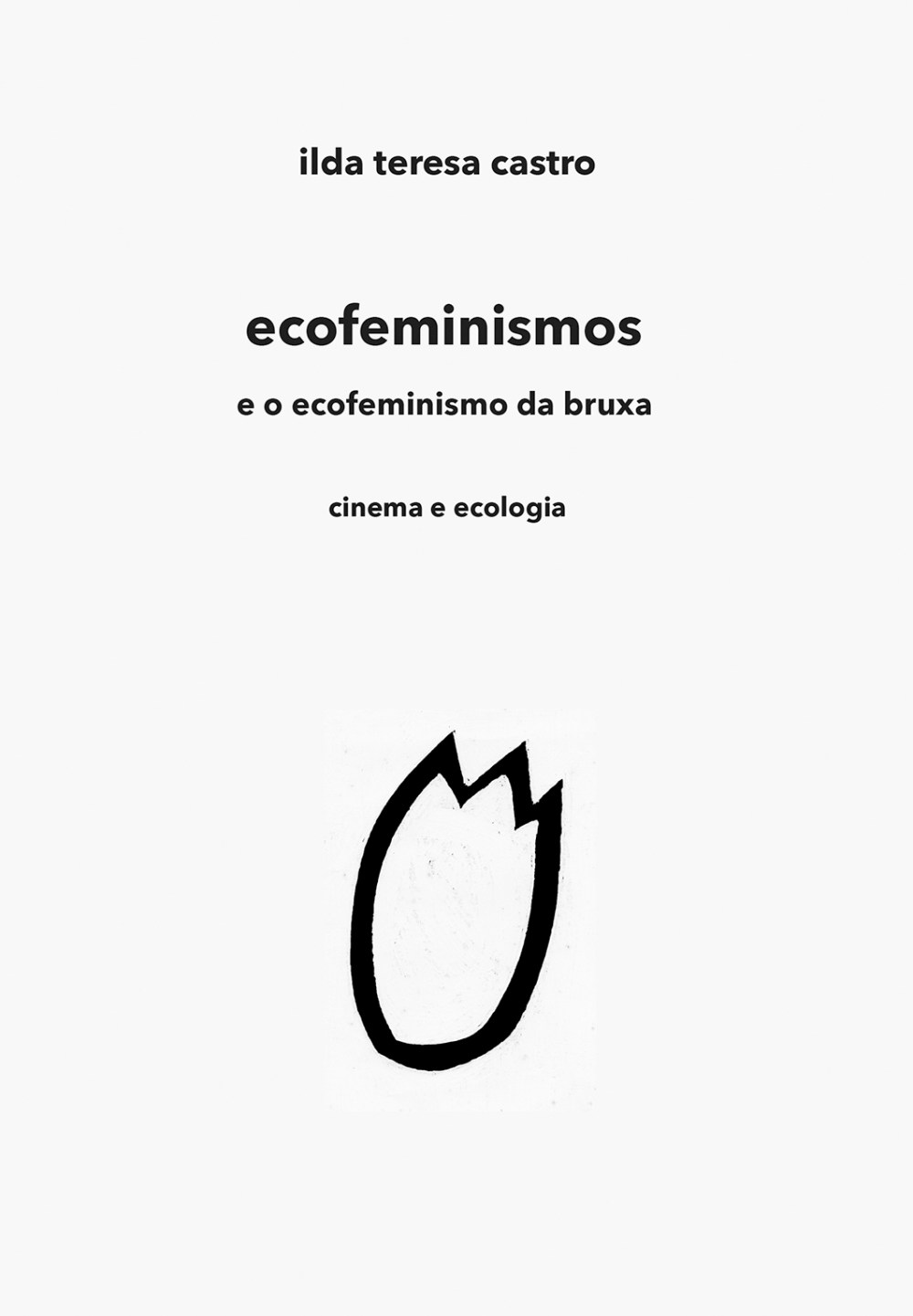
Ecofeminismos
e o ecofeminismo da bruxa – cinema e ecologia
Ilda Teresa Castro
Asoka Miau House Productions, Lisboa, 2023
.
por Ilda Teresa Castro*
.
Interessei-me por este tema nas minhas investigações científicas a partir de 2006, escrevi e falei sobre ele em artigos, comunicações e seminários, e também no meu anterior livro Eu Animal — argumentos para uma mudança de paradigma – cinema e ecologia (2015). Porém, esta continua a ser uma temática pouco pensada e conhecida no território europeu e mais ainda no nacional, o que sempre me instigou a uma nova abordagem. A criação do libreto da eco-ópera virino kaj naturo# foi o impulso necessário para finalizar esta edição.
Este livro colmata um vazio editorial sobre os movimentos Ecofeministas e sobre a História da Mulher na Ecologia, essenciais para se pensar e agir na actualidade.
**
apenas duas notas:
Nunca antes de escrever este livro vi nomeado o Ecofeminismo da Bruxa que para mim faz todo o sentido. E acrescento que ficaria muito bem à Igreja, apresentar um pedido de perdão público à Mulher, pelas atrocidades brutais a que tantas a Inquisição vitimou e também pela herança de imaginário colectivo de medo que lhes inculcou, e que desde então persiste de geração em geração, associado à possibilidade de serem livres de homem, autónomas e conhecedoras da Natureza.
Não esquecer que até hoje a Inquisição não foi abolida, apenas tem mudado de nome. A Congregação para a Doutrina da Fé, é a sucessora directa do Tribunal da Inquisição. Esta é responsável pela rejeição das uniões homoafectivas, e do que designam de ideologia de género e de feminismo radical, por exemplo. Persegue religiosas como a teóloga brasileira ecofeminista Ivone Guebara e instituições católicas feministas de reconhecida competência internacional, como a norte-americana Conferência da Liderança Religiosa Feminina — LRWC —, formada por religiosas intelectuais, educadoras e activistas em direitos humanos, e que a CDF coloca sob suspeita e condena, por discordarem do que institui como doutrina da fé e da moral. Por serem seguidoras do Feminismo Teológico, estas teólogas são acusadas de feminismo radical, numa tentativa de as reduzirem a uma atitude submissa. Por muito anacrónico que possa parecer, nos nossos dias a Inquisição persiste e prossegue na sua perseguição à Mulher.
Neste livro escrevo Mulher para me referir às mulheres, Homem para os homens, animais e seres mais-que-humanos para outros animais e seres que não os humanos, e Natureza para Natureza que é distinta da sua natureza ou da natureza de qualquer outra coisa.
**
ecofeminismos e o ecofeminismo da bruxa — cinema e ecologia #, é a fonte do libreto da eco-ópera “virino kaj naturo#” em ante-estreia na Sala Mário Viegas do Teatro São Luiz, a 7 setembro 2023. O livro terá lançamento na mesma ocasião.
Uma edição Ilda Teresa Castro & Asoka Miau House Productions.
.
** Ilda Teresa de Castro é música, cineasta, artista visual, poeta, programadora e investigadora. Formada em Cinema e em Arte, Doutorada em Ecocinema e Ecocritica, Pós-doutorada em Arte e Ecologia. Ecofeminista e activista. É autora do libreto da eco-ópera Descartes Nunca viu Um Macaco (2017). Este seu livro, Ecofeminismos e o ecofeminismo da bruxa – cinema e ecologia (2023), surge no seguimento do anterior Eu Animal — argumentos para uma mudança de paradigma – cinema e ecologia (2015), e da trilogia sobre cinema português, Curtas-Metragens Portuguesas, conversas com… (1999), Cineastas Portuguesas, conversas com… (2001), Animação Portuguesa, conversas com… (2004). Enquanto eco-artista tem apresentado instalações e ecofilmes em diversos países. Na música, integra as bandas Telectu e The Banksy´s, com Vítor Rua.
.
.
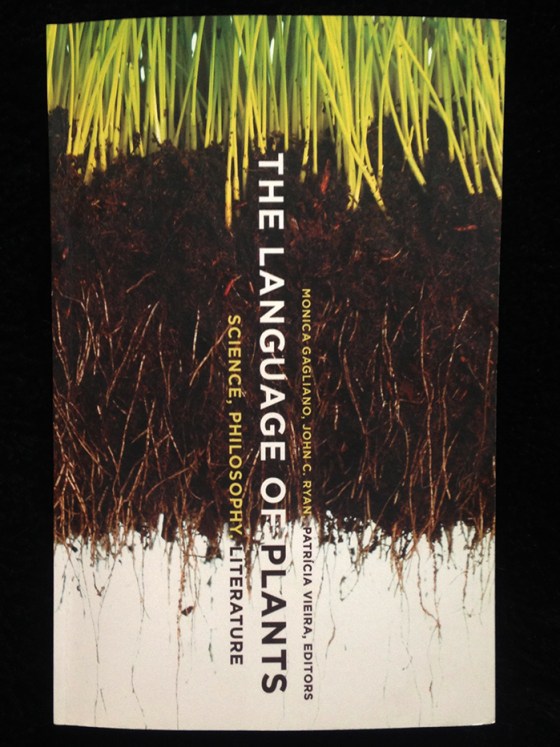
A Linguagem das Plantas – Ciência, Filosofia, Literatura
(versão original em inglês, não traduzida em português)
Edit. Monica Gagliano, John C. Ryan, Patrícia Vieira
Unicersity of Minnesota Press, Minneapolis, London, 2017
por Ilda Teresa Castro
The Language of Plants – Science, Philosophy, Literature, reúne artigos de Richard Karban, Roberto A. Raguso and André Kessler, Christian Nansen, Monica Gagliano, Michael Marder, Luce Irigaray, Nancy E. Baker, Karen L. F. Houle, Timothy Morton, Isabel Kranz, Patrícia Vieira, Joni Adamson and Catriona Sandilands, Erin James, e John C. Ryan apresentados em 3 capítulos: Science, Philosophy, Literature, num volume com cerca de trezentas páginas rematado por um Index Onomástico. A Introdução é assinada em conjunto pelos editores. Aí podemos ler em Plants And Us, “As plantas são talvez a mais fundamental forma de vida, providenciando sustento e assim possibilitando a existência de todos os animais incluindo os humanos. A sua transição evolucionária do período inicial aquático Paleozoico para uma vida vegetativa fora de água, é sem dúvida um dos acontecimentos com maior alcance na história da Terra. Mais à frente, em Encounters With Plants, acrescentam “Os prevalentes vícios científicos, filosóficos e literários em relação à vida vegetal que resultaram num particular modo de pensamento zoocêntrico não avançaram sem discussão. Num momento em que ainda eram vistos principalmente como autómatos passivos, o avô de Charles Darwin, o naturalista Erasmus Darwin, por exemplo, argumentava que as plantas são seres vivos animados, atribuindo-lhes sensação, movimento e um certo grau de actividade mental, enfatizando a continuidade entre a humanidade e a existência da planta”. Falando Sobre a Linguagem das Plantas e A Linguagem Científica, Filosófica e Literária das Plantas são os dois subtítulos que completam a introdução desta colectânea que procura descobrir “Que tipo de linguagem usam as plantas e como é que a linguagem das plantas pode mudar a linguagem que os humanos usam para falar sobre as plantas”.
.
.
The Language of Plants – Science, Philosophy, Literature
Edit. Monica Gagliano, John C. Ryan, Patrícia Vieira
Unicersity of Minnesota Press, Minneapolis, London, 2017
by Ilda Teresa Castro
The Language of Plants – Science, Philosophy, Literature, gathers articles from Richard Karban, Roberto A. Raguso and André Kessler, Christian Nansen, Monica Gagliano, Michael Marder, Luce Irigaray, Nancy E. Baker, Karen L. F. Houle, Timothy Morton, Isabel Kranz, Patrícia Vieira, Joni Adamson and Catriona Sandilands, Erin James, John C. Ryan presented in 3 chapters: Science, Philosophy, Literature, in a volume of about three hundred pages topped by a final Index. In the Introduction, signed jointly by the editors, we can read in Plants And Us, “Plants are perhaps the most fundamental form of life, providing sustenance, and thus enabling the existence of all animals, including us humans. Their evolutionary transition from Paleozoic aquatic beginnings to a vegetative life out of water is undoubtedly one of the farthest-reaching events in the history of Earth.” Later, on Encounters With Plants, they add “The prevalente scientific, philosophical, and literary biases toward vegetal life that have resulted in a particular zoocentric mode of thinking have not gone undisputed. At a time when they were still mainly viewed as passive automatons, Charles Darwin´s grandfather, the naturalist Erasmus Darwin, for example, argued that plants are animated, living beings and attributed to them sensation, movement, and a certain degree of mental activity, emphasizing the continuity between humankind and plant existence.” Speaking Of Plant Language e Scientific, Philosophical, and Literary Languages Of Plants are the two sub-titles that complete the introduction of this collectanea which seeks to discover “what kind of languages plants use and how the plant languages might change the languages humans use to talk about plants.”
.
.
Enxertia
Michael Marder, 2016
por Michael Marder*
Enxertia: Não é isto que sempre fazemos? E, será que em algum momento estamos livres de influências vegetais quando nos envolvemos nas suas operações?
Em agronomia, enxertos são os brotos ou ramos, inseridos num corte de uma árvore. Assim que a seiva de uma inserção se mistura com a da árvore que a recebe, o hospedeiro não volta a ser o que era antes. As suas flores ou frutas coexistem com as da variedade enxertada através da planta inteira, ou mudam e adquirem as características do enxerto, como em muitas espécies de maçãs. A enxertia, portanto, põe em evidência a plasticidade e a receptividade da vida vegetal, a sua capacidade constitutiva para a simbiose e a metamorfose, a sua abertura para o outro à custa de uma identidade fixa (mesmo a abrigada na genética) revelada, na sua própria vitalidade, como ilusória.
Ao mesmo tempo, os enxertos não são circunscritos às plantas. Eles também podem ser um procedimento cirúrgico, no qual o tecido vivo, mais frequentemente a pele, é transplantado de uma parte do corpo para outra, ou de um corpo para outro. Quando são bem sucedidos, quer dizer, quando o organismo não rejeita o tecido enxertado, essas operações revelam o carácter vegetal da corporalidade: da carne proliferando na carne, da pele respirando através de suas superfícies porosas como uma folha, do corpo inteiro juntado graças a adições e sobreposições, não como uma totalidade fechada “ou / ou”, mas como uma infinidade potencial de “e, e, e…” O próprio facto de que os enxertos se possam referir a tecidos animais ou humanos, bem como a partes de plantas, é testemunho da rebelião tranquila da palavra e da prática contra as restrições da identidade.
Numa tentativa de policiar os limites da categoria e de rectificar o subsequente estado de confusão, a língua inglesa também colora a semântica do verbo “enxertar” com o sentido de uma acção inapropriada, uma que transpõe X em Y sem levar em conta as especificidades de Y. (Como ilustração, o Dicionário de Oxford de Palavras Difíceis cita incompatibilidades entre modelos políticos distintos: “Governos do estilo ocidental não poderiam facilmente ser enxertados num país profundamente diferente.” [1]) Na melhor das hipóteses, tais acções resultarão na rejeição do enxerto pelo hospedeiro; na pior das hipóteses, elas serão experimentadas como uma imposição sufocante, desprovida de respeito pelas idiossincrasias locais sobre as quais os enxertos são enxertados. O que este significado do processo de enxertar pressupõe é que a introdução do Outro sobregrava os materiais biológicos, políticos, sociais, e outros já existentes, escondendo as suas inscrições nativas e violando os códigos que regem a sua produção. Em suma, a enxertia descarta a possibilidade de uma relação entre duas singularidades, através da qual ambas são transformadas a ponto de ser tornarem irreconhecíveis, e ultrapassam as categorias, sistemas de classificação, ou ordens do ser nas quais o nosso modo de pensar é acostumado a agrupá-las.
Não é por acaso que acabei de invocar escritos e inscrições em relação a enxertos. Aí reside a origem etimológica da palavra. Derivado do verbo grego graphein — “escrever” — ela [a origem etimológica da palavra] predispõe-nos a enxergar a relação entre o hospedeiro e o transplante em termos de substrato para uma inscrição e para o que nela está escrito. Em última análise, a diferença entre a escrita e o seu suporte desaparecerá, mas somente na condição de que ambos se tornem diferentes do que costumavam ser antes da enxertia. É verdade que desprendermo-nos de uma identidade passada (ou da ilusão de que tínhamos uma) é doloroso; esse desapego requer uma incisão no hospedeiro e a separação do enxerto do contexto inicial do seu crescimento. Em trabalhos académicos, as citações são os enxertos por excelência; ao invés de tecer um tecido de palavras sem costura, nós inevitavelmente cortamos e colamos, citamos, plantamos, implantamos e transplantamos textos estrangeiros para o corpus que estamos compondo.
O corte físico que precede a enxertia é antecipado no grego graphion, que significa “estilete” ou “utensílios de escrever”, feito da ponta afunilada de um rebento. Para uma troca não-comercial entre os dois acontecer, é preciso que fluam sucos, seiva, tinta (sangue?) em lugares onde o ramo de outra planta é empurrado dentro do tronco e um estilete pressione no pergaminho, no papel (na pele?). Ou, onde o sangue de amigos que têm os seus dedos picados, se mistura numa afirmação de um juramento secreto. Membranas, tecidos, líquidos e superfícies devem ser expostas umas às outras em toda sua nudez para um enxerto dar certo, para ele exercer a sua influência transformadora. Mas esta exposição é, ela mesmo, algo excepcionalmente difícil de conseguir e sustentar. É por isto que são necessários procedimentos que parecem ser violentos. Somente ao preço de uma violência prévia, semi-esquecida, pode ser mantido o sentido de continuidade ininterrupta.
* * *
Desde as minhas incursões numa filosofia do mundo vegetal em Plant-Thinking, tenho estado ocupado (mas também preocupado, quase obcecado) com a tarefa de enxertia cognitiva humana e outros processos nos seus análogos em plantas, e vice-versa. Como explico na introdução desse livro, ainda sem mencionar os enxertos, uma das suas principais preocupações é saber “como o pensamento humano é, em certa medida, desumanizado e se torna similar a uma planta, sendo alterado pelo seu encontro com o mundo vegetal.” [2] Quer isto dizer: como os dois tipos de pensamento podem florescer ou frutificar em conjunto, no mesmo tronco/corpo/corpus.
Além do pensamento humano e planta-pensamento, a arte e filosofia, as ciências naturais e as ciências humanas, bem como histórias intelectuais e pessoais têm sido enxertadas num outro, em subsequentes artigos e livros, como por exemplo The Philosopher´s Plant e Through Vegetal Being. [3] Pela sua natureza multifacetada e interdisciplinar, os estudos teóricos e empenhamentos práticos com plantas partilham uma coisa em comum: têm prosperado nas margens, nem totalmente dentro, nem fora de diferentes metodologias, abordagens, pontos de vista, e pessoas. Por outras palavras, têm compartilhado a característica de ser enxertos.
A enxertia desdobra-se (e os enxertos se desdobram) no espaço entre espaços, onde formas de pensar anteriormente inimagináveis eventualmente vêm à vida. Movendo-me através de linhas disciplinares, combino as conclusões da ciência das plantas com a história da filosofia, a semiótica, as composições literárias e a teoria política. Como co-autor de alguns textos com outros filósofos, artistas e cientistas de plantas, permito que as suas visões sejam enxertados nas minhas, e as minhas nas suas. Participando em debates contemporâneos sobre a ética da
biotecnologia, de práticas alimentares ou organização política, acrescento uma perspectiva vegetal inconfundível a corpos de trabalho a que esta é estrangeira. Transferindo o tecido vivo dos meus próprios textos para outro contexto, ajudo-os a viver melhor, mais plenamente, diferentemente.
.
[1] “Graft” no Oxford Dictionary of Difficult Words, editado por Archie Hobson (Oxford: Oxford University Press, 2004), p. 196.
[2] Michael Marder, Plant-Thinking: A Philosophy of Vegetal Life (New York:: Columbia University Press, 2013), p. 10.
[3] Michael Marder, The Philosopher´s Plant: An Intellectual Herbarium (New York: Columbia University Press, 2014); Luce Irigaray & Michael Marder, Through Vegetal Being (new York: Columbia University Press, 2013)
.
*Michael Marder é Professor Investigador Ikerbasco em Filosofia na Universidade do País Basco, Vitoria-Gasteiz e Professor no Instituto de Humanidades da Universidade Diego Portales, em Santiago do Chile. O seu trabalho abrange os campos da fenomenologia, da filosofia ambiental e do pensamento político. Os seus livros mais recentes incluem, Dust (2016), The Chernobyl Herbarium (2016), e o próximo Energy Dreams: Of Actuality (2017).
tradução de Gabriela Carvalho
.
.
Grafting
Michael Marder, 2016
by Michael Marder*
Grafting: do we ever do anything other than that? And are we ever free from vegetal influences when we engage in its operations?
In agronomy, grafts are the shoots or twigs, inserted into a slit of a tree. As soon as the sap of an insert mixes with that of the tree that receives it, the host is no longer the same as it was before. Either its flowers or fruits coexist with those of the grafted variety throughout the entire plant, or they change and acquire the characteristics of the graft, as in many species of apples. Grafting, therefore, foregrounds the plasticity and receptivity of vegetal life, its constitutive capacity for symbiosis and metamorphosis, its openness to the other at the expense of a fixed identity (even that ensconced in genetics) revealed, by their very vitality, as illusory.
At the same time, grafts are not circumscribed to plants. They can also name a surgical procedure, whereby living tissue, most often skin, is transplanted from one part of the body to another, or from one body to another. When they are successful, that is to say when the organism does not reject the tissues grafted onto it, these operations disclose the vegetal character of corporeality: of flesh proliferating on flesh, of skin breathing through its porous superficies like a leaf, of the entire body put together thanks to additions and superimpositions, not as a closed either/or totality but as a potential infinity of and, and, and… The very fact that grafts can refer to animal or human tissues as well as to plant parts testifies to the word’s and the practice’s quiet rebellion against the strictures of identity.
In an attempt to police category boundaries and to rectify the ensuing state of confusion, the English language also colors the semantics of the verb “to graft” with the sense of an inappropriate action, one that transposes X onto Y without regard for Y’s specificities. (By way of illustration, Oxford Dictionary of Difficult Words cites incompatibilities between distinct political models: “Western-style government could not easily be grafted onto a profoundly different country.”[1]) At best, such actions will result in the rejection of the graft by the host; at worst, they will be experienced as a suffocating imposition, lacking in respect for the local idiosyncrasies of that upon which they are grafted. What this meaning of grafting presupposes is that the introduction of the other overwrites the already existing biological, political, social, and other fabrics, occludes their native inscriptions, and violates the codes that govern their production. In short, it dismisses the possibility of a relation between two singularities, through which both are transformed beyond recognition and exceed the categories, systems of classification, or orders of being our thinking is used to group them in.
Not coincidentally, I have just invoked writing and inscription in relation to grafts. Therein lies the word’s etymological origin. Derived from the Greek verb graphein—“to write”—it predisposes us to view the relation between the host and the transplant in terms of the substratum for an inscription and that which is written on it. Ultimately, the difference between the writing and its support will disappear, but only on the condition that both would become different from what they used to be before grafting. True, letting go of past identity (or of the illusion that we had one) is far from painless; it requires an incision in the host and the separation of the graft from the initial context of its growth. In academic work, citations are the grafts par excellence; rather than weaving a seamless textile of words, we inevitably cut and paste, cite, plant, implant and transplant foreign texts onto the corpus we compose.
The physical cut that precedes grafting is anticipated in the Greek graphion, meaning “stylus” or “writing implement,” made from the tapered tip of a scion. For a non-commercial exchange between two to happen, juices, sap, ink (blood?) need to flow in spots where a branch from another plant is thrust into the trunk and a stylus presses onto parchment, paper, (skin?). Or, where the blood of friends, both of whom have prickled their fingers, mixes in an affirmation of a secret oath. Membranes, tissues, liquids, and surfaces must be exposed to one another in all their nudity for a graft to work, to exercise its transformative influence. But this exposure is, itself, something exceptionally difficult to achieve and to sustain, which is why it calls for procedures that appear to be violent. Only at the price of a prior, semi-forgotten violence can the sense of seamlessness and continuity be maintained.
* * *
Since my forays into a philosophy of the vegetal world in Plant-Thinking, I have been occupied (but also preoccupied, nearly obsessed) with the task of grafting human cognitive and other processes onto their analogs in plants, and vice versa. As I explain in the introduction to that book, still without mentioning grafts, one of its main concerns is “how human thinking is, to some extent, de-humanized and rendered plant-like, altered by its encounter with the vegetal world.”[2] That is to say: how the two kinds of thinking can blossom or come to fruition together, on the same trunk/body/corpus.
Besides human thought and plant-thinking, art and philosophy, the sciences and the humanities, as well as intellectual and personal histories have been grafted onto one another in subsequent articles and books, such as The Philosopher’s Plant and Through Vegetal Being.[3] For all their multifaceted, interdisciplinary nature, the theoretical studies of and practical engagements with plants have had one thing in common: they have thrived at the edges, neither fully inside nor outside different methodologies, approaches, points of view, and people. In other words, they have shared the characteristic of being grafts.
Grafts unfolds (and grafts unfold) in the in-between space where previously unimagined forms of thinking eventually come to life. Moving across disciplinary lines, I combine the conclusions of plant science with the history of philosophy, semiotics, literary compositions, and political theory. Co-authoring some of the texts with other philosophers, plant scientists and artists, I allow their insights to be grafted onto mine, and mine onto theirs. Weighing in on contemporary debates on the ethics of biotechnology, dietary practices, or political organization, I insert an unmistakable vegetal perspective into bodies of work, to which it is foreign. Transferring the living tissue of my own texts into another context, I help them live better, more fully, otherwise.
.
[1] “Graft,” in Oxford Dictionary of Difficult Words, edited by Archie Hobson (Oxford: Oxford University Press, 2004), p. 196.
[2] Michael Marder, Plant-Thinking: A Philosophy of Vegetal Life (New York: Columbia University Press, 2013), p. 10.
[3] Michael Marder, The Philosopher’s Plant: An Intellectual Herbarium (New York: Columbia University Press, 2014); Luce Irigaray & Michael Marder, Through Vegetal Being (New York: Columbia University Press, 2016).
.
* Michael Marder is Ikerbasque Research Professor of Philosophy at the University of the Basque Country, Vitoria-Gasteiz and Professor-at-Large in The Humanities Institute at Diego Portales University, Santiago, Chile. His work spans the fields of phenomenology, environmental philosophy, and political thought. His most recent books include Dust (2016), The Chernobyl Herbarium (2016), and the forthcoming Energy Dreams: Of Actuality (2017).
.
.
The Green Thread: Dialogues with the Vegetal World
Patrícia Vieira, Monica Gagliano, John Ryan (ed.)

Politizando as Plantas
por Patrícia Vieira*
O livro The Green Thread: Dialogues with the Vegetal World reúne um conjunto de ensaios sobre plantas nas áreas das humanidades e ciências sociais (filosofia, literatura, antropologia, cinema, artes plásticas). O fio condutor que une os vários capítulos é a crítica a uma concepção antropocêntrica das plantas como seres aos quais falta autonomia, consciência, inteligência, etc. e uma tentativa de repensar estas categorias a partir do mundo vegetal.
A definição aristotélica do ser humano como “animal político” [Zoon politikon] proscreveu, de modo amplo, todos os outros seres vivos da complexa esfera da política[i]. Enquanto os animais ainda se poderiam aproximar da acção política em virtude de sua maior semelhança com os seres humanos na escala hierárquica das diferentes formas de vida, as plantas ficaram completamente de fora desta equação. E, no entanto, a flora tem estado na vanguarda da política humana desde muito cedo. O desenvolvimento das sociedades agrícolas há cerca de doze mil anos atrás, tornada possível por uma exploração eficiente de certos tipos de plantas, desencadeou uma das mudanças mais profundas na história humana, gerando níveis sem precedentes de desigualdade e permitindo a criação de vastos impérios[ii]. Já no século XX, a chamada “Revolução Verde”, baseada na mecanização da agricultura, no uso extensivo de fertilizantes, bem como de híbridos e, mais tarde, de sementes geneticamente modificadas, teve profundas repercussões políticas. Estes desenvolvimentos beneficiaram principalmente a América do Norte, a Europa e o Japão, e contribuíram para o relativo declínio da União Soviética, que começou a cultivar sementes híbridas mais tarde do que o Ocidente, e para o empobrecimento geral da África, incapaz de financiar a transição de uma agricultura de subsistência para um sistema agrícola industrial[iii].
Mas as plantas não se limitam a fornecer a base material para o desenvolvimento político humano, nem formam simplesmente o pano de fundo de acções políticas. Grande parte da história da humanidade foi concebida em termos de uma luta para conquistar e governar uma natureza selvagem e feroz, sendo as plantas um dos aspectos mais salientes deste poderoso inimigo a ser subjugado[iv]. Se invertermos a famosa frase de Carl von Clausewitz do início do século XIX e considerarmos a política como uma continuação da guerra por outros meios[v], chegamos à conclusão que a nossa relação com a vida vegetal sempre foi eminentemente política. Temos lutado para superar o reino vegetal em vastas áreas de terra, colonizado o seu território e forçado as plantas a tornarem-se súbditos obedientes, trabalhando para colmatar as nossas necessidades.
A classificação das plantas como perigosas ou úteis, invasivas ou nativas, formando um “Inferno verde”, ou, em vez disso, espelhando o “Paraíso terrestre” atesta a natureza política da nossa relação com a flora. Recorrendo à definição da política proposta pelo jurista Carl Schmitt como a distinção entre inimigos e amigos[vi], os seres humanos comportam-se politicamente perante a vida vegetal através da identificação de alguns dos seus elementos – plantas venenosas, por exemplo –, como inimigos a serem destruídos, enquanto que outras são muito bem aceites sob o título de amigas – plantas nutritivas, como as batatas ou as maçãs, plantas belas, como as orquídeas, plantas perfumadas, tais como alecrim, e assim por diante. Os seres humanos têm forjado com as plantas parcerias estratégicas, cujo sucesso determinou a nossa sobrevivência numa variedade de ambientes diferentes, ao mesmo tempo que contribuíram para a expansão exponencial de certas espécies vegetais – arroz, milho, ou as roseiras, por exemplo – em detrimento de outras.
A definição da política de Schmitt destaca a natureza inerentemente ambígua da expressão “politizar as plantas.” Como já vimos, os seres humanos trataram desde sempre as plantas de forma política, postulando algumas como amigáveis e outras como hostis aos seus esforços. Considerando que o núcleo de uma atitude política é estabelecer uma distinção entre amigos e inimigos, no entanto, também dos animais e plantas pode ser dito que se comportam politicamente. Os seres vegetais são capazes de reconhecer os seus parentes, forjar alianças com outras plantas e animais – por exemplo, com insectos, que agem como polinizadores – e identificar os seus inimigos, que tentam evitar, por exemplo, pela libertação de compostos voláteis no ar ou pela contracção das suas folhas[vii]. A expressão politização das plantas implica, deste modo, a consideração das plantas como objecto politizado, assim como sujeito que politiza.
A política humana e a política das plantas interagem, chocam e, por vezes reforçam-se. As plantas não são meros seres passivos que sofrem os efeitos da acção humana mas frequentemente informam e chegam mesmo a determinar a nossa actividade política. Torna-se assim impossível distinguir entre política humana sobre plantas e a política das plantas tout court. Este intercâmbio, ou melhor, a irrelevância destas categorias simplistas, revela a relação simbiótica que temos com as plantas.
As plantas compreenderam há muito das vantagens de ter os seres humanos e outros animais do seu lado. Basta pensarmos na beleza e fragrância das flores para nos apercebermos de como as plantas nos manipulam para as admirarmos e, deste modo, as ajudarmos a reproduzirem-se. Somos nós, humanos, que temos ficado para trás na nossa convicção de que podemos ser mestres e senhores das plantas. Já é tempo de aprendermos com elas e adoptarmos uma atitude mais diplomática na nossa política das plantas.
[i] Aristotle, Politics, I, 1253a.
[ii] Para uma análise em profundidade do aumento da desigualdade nas sociedades humanas, consulte Kent Flannery e Joyce Marcus, The Creation of Inequality: How our Pre-Historic Ancestors Set the Stage for Monarchy, Slavery, and Empire (Cambridge, MA: Harvard University Press, 2012).
[iii] J.R. McNeill, Something New Under the Sun: An Environmental History of the Twentieth Century (London and New York: Norton, 2001), 225–26.
[iv] Para uma análise detalhada das maneiras em que as plantas e florestas em particular, têm sido interpretados como o reverso da civilização no mundo ocidental, ver Robert Pogue Harrison, Forests: The Shadow of Civilization (Chicago and London: University of Chicago Press, 1993).
[v] Carl von Clausewitz escreveu famosa frase “A guerra é uma mera continuação da política por outros meios” em On War. Project Gutenberg. Consultado a 16 de Junho de 2015, http://www.gutenberg.org/files/1946/1946-h/1946-h.htm.
[vi] Carl Schmitt, The Concept of the Political, trans. G. Schwab (Chicago and London: The University of Chicago Press, 2007), 29.
[vii] Para alguns exemplos, ver Raguso, “Wake Up and Smell the Roses,” Annual Review of Ecology, Evolution and Systematics 39 (2008): 549-69; Martin Heil e Jurriaan Ton, “Long-distance Signalling in Plant Defence,” Trends in Plant Science 13 (2008): 264–72; Marcel Dicke, “Behavioural and Community Ecology of Plants That Cry for Help,” Plant, Cell &Environment 32 (2009): 654–65; Martin Heil e Richard Karban, “Explaining Evolution of Plant Communication by Airborne Signals,” Trends in Ecology and Evolution 25 (2010): 137–44.
.
* Patricia Vieira. Professora Associada de Espanhol & Português e Estudos de Cinema & Media, e Diretora do Programa de Literatura Comparada na Universidade de Georgetown. Co-editou Existential Utopia: New Perpectives on Utopian Thought (2011). É co-editora geral da série de livros Future Perfect: Images of the Time to Come in Philosophy, Politics and Cultural Studies na Rowman e Littlefield International.
.
.
The Green Thread: Dialogues with the Vegetal World
Patrícia Vieira, Monica Gagliano, John Ryan (ed.)
Politicizing Plants
by Patricia Vieira*
The book The Green Thread: Dialogues with the Vegetal World brings together essays about plants in the humanities and social sciences (philosophy, literature, anthropology, cinema and the arts). The guiding thread that unites the various chapters is a critique of an anthropocentric view of plants, whereby they lack autonomy, conscience, intelligence, and so on, and an attempt to rethink these categories from the perspective of the vegetal world.
Aristotle’s foundational definition of the human being as a “political animal” [zōon politikon] proscribed, in one broad stroke, all other living entities from the complex realm of politics.[1] While animals might still approximate political action by virtue of their propinquity to humans in the Aristotelian hierarchical scale of life, plants were altogether absent from the picture. And yet flora has been at the forefront of human politics from very early on. The development of agricultural societies some twelve thousand years ago, made possible by an efficient exploitation of certain types of plants, triggered one of the most profound shifts in human history, generating unprecedented levels of inequality and allowing for the rise of vast empires.[2] Already in the twentieth century, the so-called “Green Revolution,” based upon the mechanization of agriculture, the extensive use of fertilizers, as well as of hybrid and, later, genetically modified seeds, had profound political consequences. These developments primarily benefited North America, Europe, and Japan, while contributing to the relative decline of the Soviet Union, which caught on to hybrid seeds later than the West, and to the general impoverishment of Africa, unable to fund the transition from a traditional to an industrial agricultural system.[3]
But plants do not merely provide the material basis for human political development, nor do they simply form the backdrop against which politics takes place. Much of humankind’s history has been framed in terms of a fight to conquer and rule over a wild and fierce nature, plants being one of the most salient aspects of this powerful enemy to be subdued.[4] If we invert Carl von Clausewitz’s famous dictum from the early nineteenth century and regard politics as a continuation of war by other means,[5] then our relationship with vegetal life has always been eminently political. We have struggled to overcome plants’ hold onto vast swathes of the earth, colonized their territory, and forced them to become obedient subjects working to fulfill our needs.
The classification of plants as dangerous or useful, invasive or native, forming a “green Hell” or, instead, mirroring the “earthly Paradise” testifies to the political nature of our engagement with flora. Going back to jurist Carl Schmitt’s understanding of politics as the distinction between enemies and friends,[6] humans behave politically toward vegetal life by identifying certain of its elements—poisonous plants, for instance—as enemies to be destroyed, while others are warmly accepted within the fold of friendship—edible, nutritious plants such as potatoes or apples, beautiful ones, like orchids, fragrant ones, such as rosemary, and so on. Humans have forged strategic alliances with plants, the success of which has determined our survival in a variety of different environments, at the same time as it has contributed to the exponential expansion of certain vegetal species—rice, maize, or rose bushes, for instance—to the detriment of others.
Schmitt’s definition of politics highlights the inherently ambiguous nature of the expression “politicizing plants.” As we have just seen, humans have always rendered plants political by positing some of them as friendly and others as inimical to our endeavors. Considering that the core of a political attitude is to draw a distinction between friends and enemies, however, both animals and plants can also be said to behave politically. Vegetal beings are able to recognize their kin, forge alliances with other plants and animals—for instance, with insects, who act as pollinators—and identify their enemies, which they try to avoid, for example, by releasing volatiles into the air or by contracting their leaves.[7] To envision “plants” in the expression politicizing plants both as the politicized object and as the politicizing subject is one of the challenges posed by contemporary environmental politics. How do human politics and the politics of plants intersect, clash, or are mutually reinforced? In which ways has vegetal life informed or even dictated human political activity? And, in turn, what have been some of the effects of human politics for flora? These questions reveal that, at the limit, it becomes impossible to distinguish between human politics about plants and plant politics tout court.
Notes
[1]. Aristotle, Politics, I, 1253a.
[2]. For an in-depth analysis of the rise of inequality in human societies, see Kent Flannery and Joyce Marcus, The Creation of Inequality: How our Pre-Historic Ancestors Set the Stage for Monarchy, Slavery, and Empire (Cambridge, MA: Harvard University Press, 2012).
[3]. J.R. McNeill, Something New Under the Sun: An Environmental History of the Twentieth Century (London and New York: Norton, 2001), 225–26.
[4]. For a detailed analysis of the ways in which plants, and forests in particular, have been construed as the obverse of civilization in the Western world, see Robert Pogue Harrison, Forests: The Shadow of Civilization (Chicago and London: University of Chicago Press, 1993).
[5]. Carl von Clausewitz famously wrote that “War is a mere continuation of policy by other means” in On War. Project Gutenberg. Accessed June 16, 2015, http://www.gutenberg.org/files/1946/1946-h/1946-h.htm.
[6]. Carl Schmitt, The Concept of the Political, trans. G. Schwab (Chicago and London: The University of Chicago Press, 2007), 29.
[7]. For some examples, see Raguso, “Wake Up and Smell the Roses,” Annual Review of Ecology, Evolution and Systematics 39 (2008): 549–69; Martin Heil and Jurriaan Ton, “Long-distance Signalling in Plant Defence,” Trends in Plant Science 13 (2008): 264–72; Marcel Dicke, “Behavioural and Community Ecology of Plants That Cry for Help,” Plant, Cell &Environment 32 (2009): 654–65; Martin Heil and Richard Karban, “Explaining Evolution of Plant Communication by Airborne Signals,” Trends in Ecology and Evolution 25 (2010): 137–44.
*Patrícia Vieira. Associate Professor of Spanish & Portuguese and Film & Media Studies, and Director of the Comparative Literature Program at Georgetown University. She co-edited the volume Existential Utopia: New Perpectives on Utopian Thought (2011). She is general co-editor of the book series Future Perfect: Images of the Time to Come in Philosophy, Politics and Cultural Studies at Rowman and Littlefield International.
.
.
em breve / coming soon
Through Vegetal Being . Luce Irigaray & Michael Marder . 2016
Grafts writings on plants . Michael Marder . 2016

.
.
Paisagens Sensoriais em Harold Pinter:
Para um Estudo Ecocritico Sobre a Estética Simbolista
Graça P. Corrêa . 2011
.
 .
.
por Graça P. Corrêa*
No âmbito das mais recentes abordagens críticas e teorias interdisciplinares sobre os conceitos de paisagem e de espaço, e tendo como objecto de pesquisa o teatro contemporâneo do dramaturgo britânico Harold Pinter, este livro constitui o primeiro estudo a relacionar as imagens dramáticas e paisagens sensoriais da sua obra com a teoria estética do Simbolismo, de forma a revelar os ecos micropolíticos e ecocríticos da sua dramaturgia.
A par de adoptar uma perspectiva fenomenológica da subjetividade sugerida por Maurice Merleau-Ponty e Stanton Garner, entre outros, esta obra invoca a noção de micropolítica de Gilles Deleuze e Félix Guattari, bem como o conceito deste último de uma ecologia combinada—mental, social, e ambiental—com vista a uma leitura das paisagens sensoriais.
Em termos ecocríticos, as paisagens de Pinter alertam-nos contra o fim da “natureza”, contra o enfraquecimento das relações vitais entre os seres humanos e a natureza não-humana. Em termos micropolíticos, as imagens sensoriais da sua obra revelam uma preocupação com a dimensão ética dos seres individuais e com a ecologia dos seus relacionamentos no espaço ambiental que partilham.
Este estudo propõe uma experiência fenomenológica dos textos e performances de teatro de Pinter, bem como uma leitura transdisciplinar das suas paisagens, não apenas das suas características espaciais e sensoriais, mas também através das interacções estéticas que tecem com a dramaturgia, ficção, filosofia, poesia e pintura de outros autores, nomeadamente Mallarmé, Rilke, Briusov, Maeterlinck, Rachilde, Patrício, Yeats, Munch, Sacher-Masoch, e Kafka.
.
excerto do livro:
“Michel Foucault considera que “toda uma história dos espaços continua por ser escrita”, e que esta será também a história dos poderes, “desde as grandes estratégias da geopolítica até às pequenas táticas do habitat, da arquitectura institucional da sala de aula até ao desenho dos hospitais, passando pelas instalações financeiras e políticas” (“The Eye of Power” 1980).
Segundo Foucault, o espaço tem sido tratado como uma entidade morta, fixa e imóvel, devido à obsessão da história ocidental com o tempo (ou com tropos temporais, tais como o desenvolvimento, a suspensão, as crises, os ciclos). Uma tal história dos espaços, contudo, seria talvez insuficiente para pensar o espaço, a paisagem e o lugar de uma forma holística e transdisciplinar por forma a incluir também a materialidade dinâmica de uma ordem não-humana. Com efeito, na maior parte dos estudos críticos, a paisagem é considerada uma construção ideológica e cultural, um “modo de ver” condicionado por estruturas sociais que orientam o enquadramento do espaço. Tais análises não só denotam demasiada ênfase nos aspectos da visão e da visualidade, com uma desvalorização implícita de outros canais sensoriais de cognição, como também assumem que o conceito de paisagem nunca é isento de codificação cultural, fazendo assim perder o sentido de “terreno” ou de “terra” implícito na etimologia da palavra.
Uma leitura antropocêntrica e exclusivamente cultural do conceito de paisagem tende a depreciar todos os aspectos orgânicos do ser humano, assim como a desvalorizar a complexidade, actividade imanente, e capacidade de engendrar formações e diferenciações de toda a matéria não-humana.
A este propósito quero referir a proposta de Félix Guattari, de que precisamos de interligar a ecologia ambiental com a ecologia social e a ecologia mental, de modo a articular uma “ecofilosofia” ou ética ecocêntrica (Chaosmose, 1992). O conceito de três ecologias interdependentes decorre de uma visão não dualista da cultura/natureza e sugere que a “natureza” não é o oposto da “cultura”, mas sim o seu contexto mais amplo. Neste sentido, uma leitura da paisagem no teatro, na performance e na literatura dramática jamais se poderá cingir a um levantamento das características dos espaços naturais que constam numa obra, pois tal seria encarar a “natureza” como se fosse apenas mais um texto ou representação, em lugar de uma materialidade envolvente, viva e criativa, indissociável da cultura.” (p.38-9)
.
*Graça P. Corrêa realizou o doutoramento em Theatre & Film Studies no Graduate Center da City University of New York. É actualmente investigadora pós-doc com uma bolsa da FCT enquanto membro integrado do Centro de Filosofia da Ciência da Universidade de Lisboa (CFCUL) e do Centro de Artes e Comunicação da Universidade do Algarve (CIAC). Como bolseira Fulbright e da Fundação Gulbenkian realizou um mestrado em Encenação no Emerson College, Boston. É licenciada em Arquitectura pela UTL e fez o curso de Teatro da ESTC. Além dos seus projectos de investigação e de diversas publicações académicas nacionais e internacionais, tem trabalhado como encenadora, dramaturga, tradutora e cenógrafa.
.
.
Sensory Landscapes in Harold Pinter:
A Study in Ecocriticism and Symbolist Aesthetic
Graça P. Corrêa . 2011
.
.
by Graça P. Corrêa*
Within the emerging interdisciplinary scope of landscape theory, and taking as its object of study the work written for the stage by contemporary British playwright Harold Pinter, this book is the first sustained in-depth study that relates Pinter’s dramatic images and sensory landscapes to Symbolist theatre and theory, so as to disclose several unexplored ecocritical and micropolitical resonances of his theatre for our times.
Ecocritically, Pinter’s landscapes evoke a sense of warning against the end of “nature,” or against the ending of vital connections between human and extra-human realities. Micropolitically, his sensory images expose a concern with the ethical dimension of individuals, and with the ecology of their relationships within a commonly shared space
This study argues for a phenomenological experience of playtexts, and for a transdisciplinary reading of their landscapes not just in terms of their actual spatial and sensory features, but also by examining their aesthetic interactions with other authors’ drama, fiction, philosophy, poetry, and paintings. Accordingly, it activates a dialogue between Pinter’s landscapes and those found in works by Symbolist and Decadent artists/thinkers Mallarmé, Rilke, Briusov, Maeterlinck, Rachilde, Patrício, Yeats, Munch, Sacher-Masoch, and Kafka
Adopting phenomenological views of subjectivity (suggested by Maurice Merleau-Ponty and Stanton Garner, among others), it invokes Gilles Deleuze and Félix Guattari’s notion of micropolitics, as well as the latter’s concept of a combined ecology—mental, social, and environmental—to discuss how a study of sensory scapes reveals the presence of ecophilosophical and political concerns all through Pinter’s dramatic oeuvre.
.
book excerpt:
Michel Foucault argues that “A whole history remains to be written of spaces—which would at the same time be the history of powers—from the great strategies of geo-politics to the little tactics of the habitat, institutional architecture from the classroom to the design of hospitals, passing via economic and political installations.”[1] For Foucault space has been treated as a dead, fixed, and immobile entity, due to Western history’s obsession with time (or with temporal tropes such as development, suspension, crises, cycles). Although I do not dispute Foucault’s proposition, such a history of spaces, if ever accomplished, would still be an insufficient account within a holistic view of space, landscape, and place that also includes the dynamic materiality of a non-human order. For Foucault—as for most structuralist and poststructuralist thinkers—the concept of space is always and exclusively tied to human development. As a result, landscape is considered to be an ideological and cultural construct, a “way of seeing” conditioned in its framing of space by social structures. Further, in such thinkers’ approach to landscape there is always an emphasis upon seeing and visuality, with an implied downgrading of other cognition channels (an aspect to which I will return below). Since in most of these views landscape is never free from cultural coding, and “land” seems to have lost its presence to become but an “essentialist” notion, the term “landscape” might as well be replaced by “culturescape.” (…)
An anthropocentric cultural reading of landscape tends to downgrade all traces of the organic/biological in the human, as well as devalue the complexity, immanent activity, and capacity of engendering formations and differentiations by non-human materiality.
In this sense, I want to invoke Félix Guattari’s suggestion that we need to link environmental ecology to social ecology and to mental ecology, so as to articulate an “ecophilosophy” or ecocentric ethics.[2] The concept of three interacting and interdependent ecologies of mind, society, and environment stems from an anti-dualistic view of culture/nature, from a notion that the materiality of “nature” is not the definitional opposite of “culture,” but rather its larger context.
In this sense, a reading for landscape in theatre, performance and drama should not be accomplished by examining their representation of green spaces and/or natural landscapes. This would be reading nature as if it were just another text, reading but the cultural constructions or representations of nature, and ignoring nature as an all-encompassing materiality, live and creative, and which cannot be dissociated from culture.
[1] Michel Foucault, “The Eye of Power,” in Power/Knowledge: Selected Interviews and Other Writings 1972-1977, edited by Cohn Gordon, translated by Cohn Gordon, Leo Marshall, John Mepham, and Kate Soper (New York: Pantheon, 1980), 149.
[2] Félix Guattari, Chaosmosis: An Ethico-Aesthetic Paradigm, translated by Paul Baims and Julian Pefanis (Bloomington, IN: Indiana University Press, 1995), 119-20.
.
*Graça P. Corrêa is a FCT post-doc research fellow affiliated with the Center for the Philosophy of Science of the University of Lisboa (CFCUL), and with the Center for Arts and Communication of the University of Algarve (CIAC). She completed a Ph. D. in Theatre and Film Studies at the Graduate Center of the City University of New York, a MA in Directing at Emerson College-Boston, a diploma in Architecture at the UTL, and a BA in Dramaturgy at ESTC. Additionally to her scholarly research and publications, she has worked as theatre director, dramaturg, translator, set designer and playwright.is a FCT post-doc research fellow affiliated with the Center for the Philosophy of Science of the University of Lisboa (CFCUL), and with the Center for Arts and Communication of the University of Algarve (CIAC). She completed a Ph. D. in Theatre and Film Studies at the Graduate Center of the City University of New York, a MA in Directing at Emerson College-Boston, a diploma in Architecture at the UTL, and a BA in Dramaturgy at ESTC. Additionally to her scholarly research and publications, she has worked as theatre director, dramaturg, translator, set designer and playwright.
.
.
Música & Água – Evolução Provável de um Relacionamento Físico & Espiritual
José Alberto Vasco . 2006

.
olhar para o próprio umbigo – uma visão sobre o meu ensaio
por José Alberto Vasco
Caracterizada como arte dos sons, a música tem desde sempre assumido uma clara evolução histórica, em que o seu sentido espiritual se tem equiparado à complexa gramática de leis físicas recolhidas e organizadas em termos matemáticos desde Pitágoras.
A água surge-nos, desde as mais remotas manifestações artísticas pré-históricas, associada a rituais de fertilidade e ao ciclo da vida em toda a sua pujança, podendo as suas significações simbólicas reduzir-se a três temas dominantes: fonte de vida, meio de purificação, centro de regenerescência .
O relacionamento físico e espiritual entre água e música perde-se na noite dos tempos, ligando-se ao mítico canto de sedução de moiras encantadas e à fascinante conversação musical das gotas de água nas sumptuosas bacias de mármore dos palácios árabes. Euterpe, uma das nove musas da mitologia greco-romana, era a musa inspiradora da música e da poesia lírica, sendo iconograficamente representada com uma flauta, instrumento de culto dionisíaco.
Em antigas civilizações como a egípcia, a grega ou a romana, de há cerca de cinco mil anos a esta parte, a música era utilizada em ocasiões especiais, como cerimónias reais, religiosas, banquetes, jogos e funerais, havendo conhecimento de que muitas dessas primeiras composições musicais eram inspiradas nas sonoridades do vento, do canto das aves e da água.
No poema épico do século VIII a.C., Odisseia, atribuído a Homero, figura cimeira do helenismo, as sedutoras e hipnóticas canções das ninfas atraíam o eloquente herói mitológico grego Ulisses e os seus marinheiros contra os dissimulados e agrestes rochedos da Ilha das Sereias, situada entre Cila e Caribdis. Para se defender, Ulisses enfiou cera nos ouvidos de toda a sua tripulação, que depois o amarrou a um dos mastros da sua embarcação, para que conseguisse ouvir a música entoada por aquelas enleantes sereias sem sucumbir ao seu encantamento.
No órgão de tubos, instrumento inventado pelos gregos, trezentos anos antes de Cristo, começou por se utilizar a força motriz da água para fazer entrar nesses tubos o ar necessário à sua manipulação. Na América do Norte, ainda hoje, tal como ancestralmente, os índios utilizam a música nos seus rituais, relacionando-a inclusivamente com a água e a sua simbologia, na tradicional dança da chuva.
Há mais de dois séculos que a água tem sido musa, fonte de inspiração e meio de trabalho de alguns dos mais notáveis compositores da História da música ocidental. O meu ensaio é um autêntico passeio da água pela História da Música, da sua pré-história até à sua contemporaneidade. Música e água continuarão certamente a relacionar-se física e espiritualmente através dos tempos.
.
.
Music & Water – Evolution of a Possible Physical & Spiritual Relationship
José Alberto Vasco . 2006
.
looking for our own belly button – a view about my essay
by José Alberto Vasco
.
Characterized as science and art of sounds, music has always evoluted during the course of times. Its spiritual sense has equated to its complex grammar. Its physical laws have been collected and organized in mathematical terms since Pythagoras.
The water appears to us, from the earliest prehistoric art forms, in the rituals associated with fertility and the cycle of life in all its strength, its symbolic meanings can be reduced to three dominant themes: the source of life, purification and rejuvenating therapy.
The physical and spiritual relationship between water and music is lost in the mists of time and it´s connected to the mythical song of the seduction of enchanted moorish and to the fascinating musical conversation between water droplets on the sumptuous marble basins of the Moorish palaces. Euterpe, Terpsichore of Greco-Roman mythology, was the muse of music and lyric poetry, iconographically represented with a flute, an instrument for the Dionysian cult.
In ancient civilizations like the Egyptian, Greek or Roman, some five thousand years back, music was used on special occasions, such as royal ceremonies, religious feasts, games and funerals, with knowledge that many of these first musical compositions were inspired by the sounds of wind, birds singing and water.
In the epic poem of the eighth century BC, Odyssey, attributed to Homer, major figure of Hellenism, seductive and hypnotic songs of nymphs attracted the eloquent Greek mythological hero Ulysses and his sailors against the hidden and rugged cliffs of the Sirens Island, located between Scylla and Charybdis. To defend himself, he poked wax in the ears of all his crew, who then tied him to one of the masts of his vessel, so that he could hear the music played by those voluptuous and enchanting mermaids without succumbing to his charm.
The driving water force was used to get the air required for the manipulation of the pipe organ, an instrument invented by the Greeks, three hundred years before Christ. In North America, the music is used by the Indians in their rituals since ancient times. Music and water in its symbolical sense are associated in the traditional “rain dance”.
For over two centuries the water has been muse and inspiration to some of the most notable Western composers of all times.
My essay is an authentic water ride throughout music history, from its prehistory to its contemporaneity. Music and water certainly will continue to relate themselves, both physically and spiritually through the ages.
(translation by dinaduque)
.
.
Ecomedia – Key Issues
ed. Steven Rust, Selma Monani, Sean Cubit . 2015

.
“Ecomedia: Key Issues is a comprehensive textbook introducing the burgeoning field of ecomedia studies to provide an overview of the interface between environmental issues and the media globally. Linking the world of media production, distribution, and consumption to environmental understandings, the book addresses ecological meanings encoded in media texts, the environmental impacts of media production, and the relationships between media and cultural perceptions of the environment.
Each chapter introduces a distinct type of media, addressing it in a theoretical overview before engaging with specific case studies. In this way, the book provides an accessible introduction to each form of media as well as a sophisticated analysis of relevant cases. The book includes contributions from a combination of new voices and well-established media scholars from across the globe who examine the basic concepts and key issues of ecomedia studies. The concepts of “frames,” “flow”, and “convergence” structure a dynamic collection divided into three parts. The first part addresses traditional visual texts, such as comics, photography, and film. The second part of the book addresses traditional broadcast media, such as radio, and television, and the third part looks at new media, such as advertising, video games, the internet, and digital renderings of scientific data.
In its breadth and scope, Ecomedia: Key Issues presents a unique survey of rich scholarship at the confluence of Media Studies and Environmental Studies. The book is written in an engaging and accessible style, with each chapter including case studies, discussion questions and suggestions for further reading.
Films on Ice
ed. Scott MacKenzie & Anna Westerstahl Stenport . 2014
“The first book to address the vast diversity of Northern circumpolar cinemas from a transnational perspective, Films on Ice: Cinemas of the Arctic presents the region as one of great and previously overlooked cinematic diversity. With chapters on polar explorer films, silent cinema, documentaries, ethnographic and indigenous film, gender and ecology, as well as Hollywood and the USSR’s uses and abuses of the Arctic, this book provides a groundbreaking account of Arctic cinemas from 1898 to the present. Challenging dominant notions of the region in popular and political culture, it demonstrates how moving images (cinema, television, video, and digital media) have been central to the very definition of the Arctic since the end of the nineteenth century. Bringing together an international array of European, Russian, Nordic, and North American scholars, Films on Ice radically alters stereotypical views of the Arctic region, and therefore of film history itself.
‘Gathering leading scholars across the three continents meeting in the Arctic, MacKenzie and Stenport open up the utopian, dystopian and heterotopian dimensions of Arctic film, a shimmering, crystalline view not only on the contest over the meanings of polar space, but onto the possibilities for reconceptualising world cinema.’ – Sean Cubitt, Professor of Film and Television, Goldsmiths, University of London”
On the Verge of a Planetary Civilization
Sam Mickey . 2014
“On the Verge of a Planetary Civilization presents a philosophical contribution to integral ecology—an emerging approach to the field that crosses disciplinary boundaries of the humanities and sciences.In this original book, Sam Mickey argues for the transdisciplinary significance of philosophical concepts that facilitate understandings of and responses to the boundaries involved in ecological issues. Mickey demonstrates how much the provocative French philosopher Gilles Deleuze contributes to the development of such concepts, situating his work in dialogue with that of his colleagues Felix Guattari and Jacques Derrida, and with theorists who are adapting his concepts in contemporary contexts such as Isabelle Stengers, Catherine Keller, and the speculative realist movement of object-oriented ontology. The book focuses on the overlapping existential, social and environmental aspects of the ecological problems pervading our increasingly interconnected planet. It explores the boundaries betweenself and other, humans and nonhumans, sciences and humanities, monism and pluralism, sacred and secular, fact and fiction, the beginning and end of the world, and much more. “
The Care of Life
ed. Miguel Beistegui, Giuseppe Bianco, Marjorie Gracieuse . 2014

“This interdisciplinary collection of essays demonstrates how the ethical and political problems we are confronted with today have come to focus largely on life. The contributors to this volume define and assess the specific meaning of life itself. It is only by doing so that we can understand why life has become an all-encompassing problem, why all questions, especially ethical and political, have become vital questions. We have reached a moment in history where every distinction and opposition is no longer in relation to life, but within it, and where life is at once a theoretical and practical problem. This book throws light on this nexus of problems at the heart of contemporary debates in bioethics and biopolitics. It helps us understand why and how life is understood, valued, cared for and framed today. Taking a genuinely transdisciplinary approach, these essays demonstrate how life is a multifaceted problem and how diverse the origins, foundations and also consequences of bioethics and biopolitics therefore are.”
Green Planet Ecology and Science Fiction
ed. Gerry Canavan, Kim Stanley Robinson

Minimal Ethics for the Anthropocene
Joanna Zylinsk . 2014

“Life typically becomes an object of reflection when it is seen to be under threat. In particular, humans have a tendency to engage in thinking about life (instead of just continuing to live it) when being confronted with the prospect of death: be it the death of individuals due to illness, accident or old age; the death of whole ethnic or national groups in wars and other forms of armed conflict; but also of whole populations, be they human or nonhuman. Even though Minimal Ethics for the Anthropocene is first and foremost concerned with life—understood as both a biological and social phenomenon—it is the narrative about the impending death of the human population (i.e., about the extinction of the human species), that provides a context for its argument. “Anthropocene” names a geo-historical period in which humans are said to have become the biggest threat to life on earth. However, rather than as a scientific descriptor, the term serves here primarily as an ethical injunction to think critically about human and nonhuman agency in the universe.
Restrained in tone yet ambitious in scope, the book takes some steps towards outlining a minimal ethics thought on a universal scale. The task of such minimal ethics is to consider how humans can assume responsibility for various occurrences in the universe, across different scales, and how they can respond to the tangled mesh of connections and relations unfolding in it. Its goal is not so much to tell us how to live but rather to allow us to rethink “life” and what we can do with it, in whatever time we have left. The book embraces a speculative mode of thinking that is more akin to the artist’s method; it also includes a photographic project by the author.”
Ewa Ziarek – Julian Park Professor of Comparative Literature, University at Buffalo
Voice and Environmental Communication
ed. Jennifer Peeples, Stephen Depoe

“Voice and Environmental Communication explores how people give voice to, and listen to the voices of, the environment. As anxieties around degrading environments increase, so too do the number and volume of voices vying for the opportunity to express their experiences, beliefs, anxieties, knowledge and proposals for meaningful change. Nature itself speaks through, and perhaps to, individuals who advocate on behalf of the environment. This collection includes nine original essays organized into three sections: Voice and Environmental Advocacy, Voice and Consumption, and Listening to Non-human Voices. Four notable scholars reflect on these chapters, and provide both an audience to the scholars as well as a forum for extending their own understanding of voice and the environment. This foundational book introduces the relationship between these two fundamental aspects of human existence and extends our knowledge of the role of voice in the study of environmental communication.”
.
The Emergent Agriculture
Farming, Sustainability and the Return of the Local Economy
Gary S. Kleppel . 2014
“Long embraced by corporations who are driven only by the desire for profit, industrial agriculture wastes precious resources and spews millions of tons of greenhouse gases into the atmosphere each year, exacerbating climate change and threatening the very earth and water on which we depend. However, this dominant system, from which Americans obtain most of their food, is being supplanted by a new paradigm.
The Emergent Agriculture is a collection of fourteen thematic essays on sustainability viewed through the lens of farming. Arguing that industrial food production is incompatible with the realities of nature, science and ethics, this lyrical narrative makes the case for a locally based food system which is:
- Stable in the face of economic uncertainty
- Resilient in the face of environmental variability
- Grounded in stewardship of the land, on attaching value to food and the craft involved in producing it, and on respecting the dignity of farmers, consumers and livestock.
A revolution in food production is underway. Written from the vantage point of an ecologist who is also a farmer, The Emergent Agriculture is essential reading for anyone interested in food security and the potential for growing local economies. Food for thought about the future of food.”
.
Culture and Media – Ecocritical Explorations
ed. Rayson K. Alex, S. Susan Deborah, Sachindev P.S. . 2014
“Indian ecocriticism has not yet adequately demonstrated the applicability of ecological/deep ecological/tinai principles to visual texts. Culture and Media: Ecocritical Explorations closes this gap at the most opportune moment. Though this volume accommodates ecologically oriented interpretations from several cultures across the world, it reserves the centre stage for Indian ecocriticism and ecotheory quite appropriately. The volume effectively challenges the major documents on ecocriticism and theory (published by international presses), which have been reluctant to give space to tinai criticism and theory that transcend Dravidian or Tamil boundaries. The day is not far when cinema of the world, shaped by tinai theory, will employ tinai hermeneutics to gain fresh insight, which, in turn, will feed into the processes of creation and production of relevant and great movies.”
in Cambridge Scholars Publishing
.
Image Politics of Climate Change – Visualizations, Imaginations, Documentations
ed. Birgit Schneider / Thomas Nocke . 2014
“»Image Politics of Climate Change« combines a wide interdisciplinary range of perspectives and questions, treated here in sixteen interdisciplinary case studies. The author’s specializations include both visual practice and theory: in the fields of climate sciences, computer graphics, art, curating, art history and visual studies, communication and cultural science, environmental and science & technology studies. The close interlinking of these viewpoints promotes in-depth insights into issues of production and analysis of climate visualization.”
in Transcript
Eco-Trauma Cinema
ed. Anil Narine . 2014

“Film has taken a powerful position alongside the global environmental movement, from didactic documentaries to the fantasy pleasures of commercial franchises. This book investigates in particular film’s complex role in representing ecological traumas. Eco-trauma cinema represents the harm we, as humans, inflict upon our natural surroundings, or the injuries we sustain from nature in its unforgiving iterations. The term encompasses both circumstances because these seemingly distinct instances of ecological harm are often related, and even symbiotic: the traumas we perpetuate in an ecosystem through pollution and unsustainable resource management inevitably return to harm us.
Contributors to this volume engage with eco-trauma cinema in its three general forms: accounts of people who are traumatized by the natural world, narratives that represent people or social processes which traumatize the environment or its species, and stories that depict the aftermath of ecological catastrophe. The films they examine represent a central challenge of our age: to overcome our disavowal of environmental crises, to reflect on the unsavoury forces reshaping the planet’s ecosystems, and to restructure the mechanisms responsible for the state of the earth.”
Film and Everyday Eco-disasters
by Robin L Murray e Joseph K Heumman . 2014
“Eco-disasters such as coal-mining accidents, oil spills, and food-borne diseases appear regularly in the news, making them seem nearly commonplace. These ecological crises highlight the continual tensions between human needs and the environmental impact these needs produce. Contemporary documentaries and feature films explore environmental-human conflicts by depicting the consequences of our overconsumption and dependence on nonrenewable energy.
Film and Everyday Eco-disasters examines changing perspectives toward everyday eco-disasters as reflected in the work of filmmakers from the silent era forward, with an emphasis on recent films such as Dead Ahead, an HBO dramatization of the Exxon Valdez disaster; Total Recall, a science fiction action film highlighting oxygen as a commodity; The Devil Wears Prada, a comment on the fashion industry; and Food, Inc., a documentary interrogation of the food industry. The authors evaluate not only the success of these films as rhetorical arguments but also their rhetorical strategies. This interdisciplinary approach to film studies fuses cultural, economic, and literary critiques in articulating an approach to ecology that points to sustainable development as an alternative to resource exploitations and their associated everyday eco-disasters.”,
.
Ecology and Contemporary Nordic Cinemas
From Nation-building to Ecocosmopolitanism
Pietari Kaapa . 2014
.
Green Documentary Environmental Documentary in the 21st Century
Helen Hughes . 2014
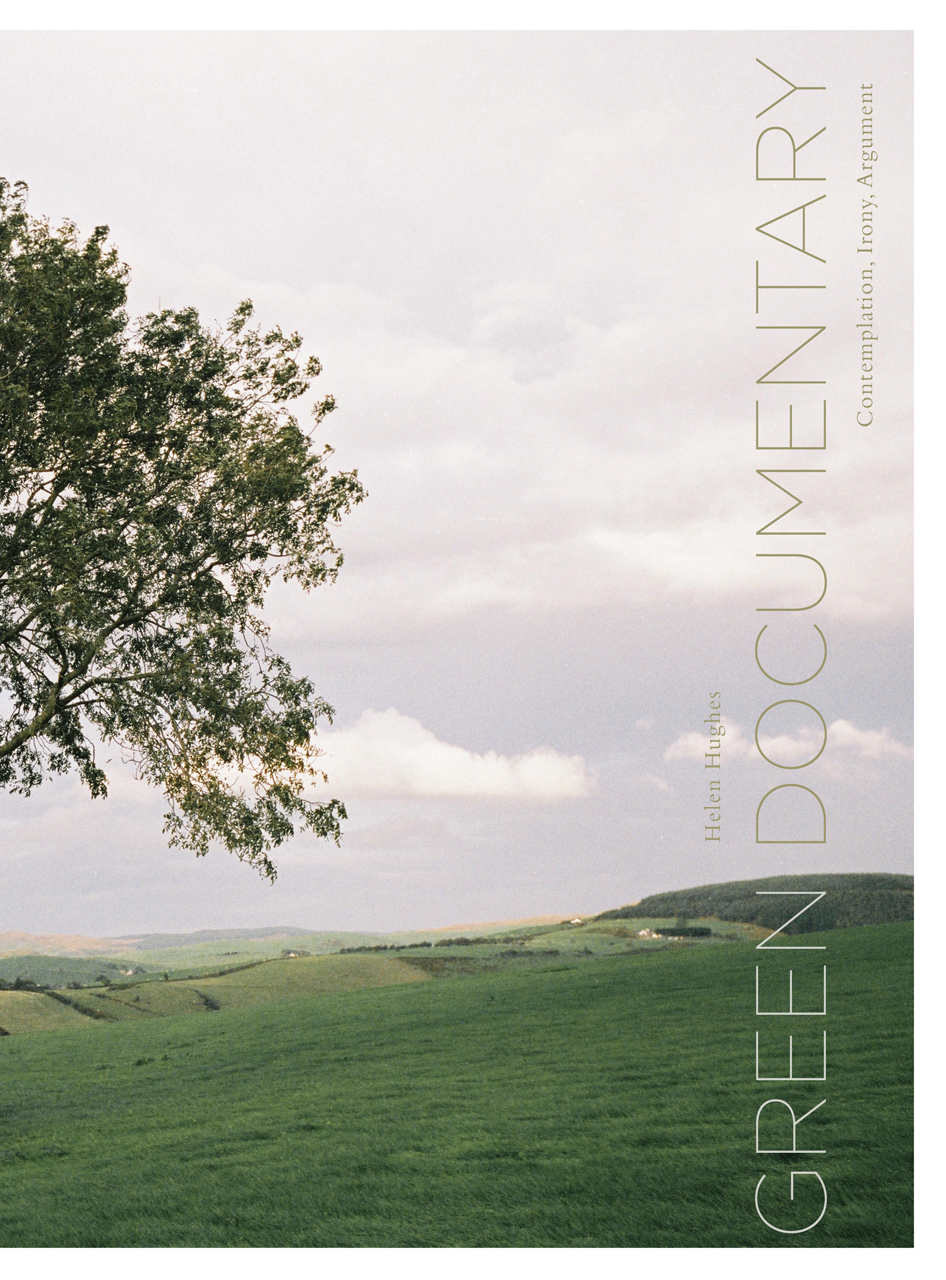
“During the first decade of the twenty-first century, a stunning array of documentary films focusing on environmental issues, representing the world on the brink of ecological catastrophe, has been met with critical and popular acclaim. This cohesive and accessible volume is the first book-length study of environmental documentary filmmaking, offering a coherent analysis of controversial and high-profile documentary films such as Gasland, An Inconvenient Truth, Manufactured Landscapes, and The Cove. With analysis that includes the wider context of environmental documentary filmmaking, such as Modern Life and Sleep Furiously, about local rural communities in Britain and Europe, Green Documentary also contributes to the ongoing debate on representing the crisis.”
in The University of Chicago Press Books
.
New Documentary Ecologies
Emerging Platforms, Practices and Discourses
Ed. Kate Nash, Craig Hight, Catherine Summerhayes . 2014
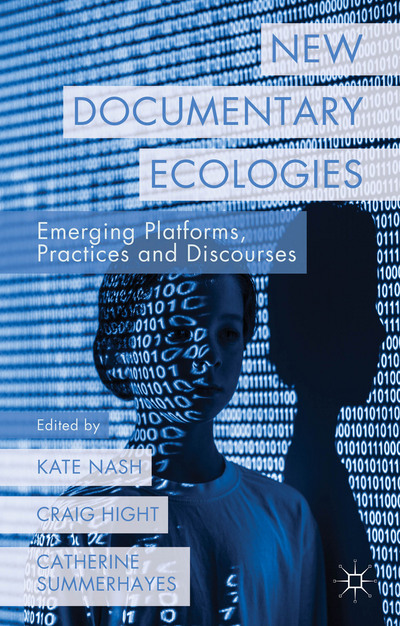
“Documentary remains a vital and dynamic media form, one that has persisted through decades of change in patterns of media production, distribution and reception, from its early conception in silent filmmaking, through ‘new’ media such as television, to the current explosion of digital platforms. New generations of documentary filmmakers, multimedia designers, online curators and social media aggregators are exploring the challenges and opportunities of a digital environment characterised as collaborative, participatory, and interactive. This book provides a unique collection of recent research into the ways in which these digital producers are adopting the ‘documentary project’ across digital platforms, developing new documentary practices and providing distinctive new ways for audiences to engage with reality.”
Com a Natureza
A Filosofia da Natureza como Poética através de Schelling, Heidegger, Benjamin e Nancy
Warwick Mules . 2014

With Nature (Com a Natureza) proporciona novas maneiras de pensar sobre a nossa relação com a Natureza na actualidade mediada pela cultura tecnológica. Warwick Mules estabelece conexões originais com a filosofia crítica alemã e com o pós-estruturalismo francês, a fim de examinar os efeitos da tecnologia nas nossas interações com o mundo natural. Ao fazê-lo, o autor propõe uma nova forma de pensar sobre o eco-self em termos de uma partilha cuidadosa do mundo com ambos os seres, humanos e não-humanos. With Nature (Com a Natureza), em última análise defende uma poética da vida quotidiana que afirma o lugar da relação humano-Natureza como um lugar criativo e produtivo para a auto-renovação e redireccionamento ecológico.
O livro integra a série dos Estudos Culturais de Naturezas, Paisagens e Ambientes da editora Intellect Ltda.
(tradução ildateresacastro)
.
With Nature
Nature Philosophy as Poetics through Schelling, Heidegger, Benjamin and Nancy
Warwick Mules . 2014
With Nature provides new ways to think about our relationship with nature in to- day’s technologically mediated culture. Warwick Mules makes original connections with German critical philosophy and French post-structuralism in order to examine the effects of technology on our interactions with the natural world. In so doing, the author proposes a new way of thinking about the eco-self in terms of a careful sharing of the world with both human and nonhuman beings. With Nature ultimately argues for a poetics of everyday life that affirms the place of the human-nature relation as a creative and productive site for ecological self-renewal and redirection.
Part of the Cultural Studies of Natures, Landscapes and Environments series
in Intellect Publishers of Original Thinking
.
Plants and Literature
Essays in Critical Plant Studies
Laist, Randy (Ed.)
Amsterdam/New York, NY, 2013

“Myth, art, literature, film, and other discourses are replete with depictions of evil plants, salvific plants, and human-plant hybrids. In various ways, these representations intersect with “deep-rooted” insecurities about the place of human beings in the natural world, the relative viability of animalian motility and heterotrophy as evolutionary strategies, as well as the identity of organic life as such. Plants surprise us by combining the appearance of harmlessness and familiarity with an underlying strangeness. The otherness of vegetal life poses a challenge to our ethical, philosophical, and existential categories and tests the limits of human empathy and imagination. At the same time, the resilience of plants, their adaptability, and their integration with their habitat are a perennial source of inspiration and wisdom. Plants and Literature: Essays in Critical Plant Studies examines the manner in which literary texts and other cultural products express our multifaceted relationship with the vegetable kingdom. The range of perspectives brought to bear on the subject of plant life by the various authors and critics represented in this volume comprise a novel vision of ecological interdependence and stimulate a revitalized sensitivity to the relationships we share with our photosynthetic brethren.”
Series Editor:
Michael Marder (IKERBASQUE / The University of the Basque Country, Vitoria)
Ecocinema Transnational
Cultura do Filme numa Era de Transformação Ecológica
editado por Tommy Gustafsson e Pietari Kaapa . 2013
autores: Pietari Kaapa . Enoch Yee-Lok Tam . Kiu-wai Chu . Roberto Forns-Broggi . Ilda Teresa de Castro . Corrado Neri . Tommy Gustafsson . Inês Crespo e Ângela Pereira . Susan Ward and Rebecca Coyle .

“A denúncia ecocritica encontra por vezes eco em filmes que não tendo esse objectivo de missão também cumprem um papel influenciador no ecoplano global, mesmo que não seja esse declaradamente o seu enfoque principal. Nesse postulado, tomo como matéria de análise os conteúdos fílmicos de duas obras totalmente distintas, um filme assumidamente de denúncia e missão ecocritica, Earthlings (Shaun Monson, 2005) e um filme que não se inscreve nessa categoria, Encounters at the End of the World (Werner Herzog, 2007). Ambos são casos de reduzida pégada cinemática, são filmes produzidos em suporte digital, em cenários naturais, rodados com câmeras à mão, com não-actores, com baixos recursos de produção e equipas reduzidas – em Encounters a equipa era constituída apenas por Herzog e um cameraman, estando a captação de som a cargo de Herzog; em Earthlings, parte do registo de imagens foi captado por Monson com uma câmara escondida e a outra parte são imagens de arquivo de outras produções independentes e de baixo custo.
São ainda duas obras recentes que convocam olhares e mapeamentos da realidade que consagram uma ordem do fílmico directamente relacionada com a Terra e com o vivo e tendentes com o seu olhar a criar novos olhares no espectador. Obras que intimam scissuras nas estruturas paradigmáticas e convencionais instituídas e evidenciam quanto as implicações das questões ambientais e do vivo na precariedade da situação actual se espraiam para além de limites territoriais, geopolíticos e económicos e exortam os seres humanos, os estados e as nações a uma consciencialização planetária e cosmobiológica. No movimento que projectam convocam um distanciamento capaz de abrir espaço a um olhar global que se posiciona dentro e fora da realidade que observa e de que também faz parte. E que está presente quer na reflexão e análise das actuais práticas de utilização de animais não-humanos para proveito dos humanos, no caso de Earthlings, quer na relação estabelecida com uma comunidade que reside afastada das sociedades de consumo, embora a maioria dos seus elementos investigue e produza conhecimento a ser utilizado por estas mesmas sociedades, no caso do filme de Herzog. São olhares sobre interesses, métodos e práticas do capitalismo global, que na exposição e contacto que realizam, o questionam. E esse movimento está na base de uma consciência que é simultaneamente local e global, individual e colectiva.”
Castro, Ilda Teresa . “Dimensões da humanidade em Earthlings (2005) e Encounters at the End of the World (2007)”,101-117.
.
Transnational Ecocinema
Film Culture in an Era of Ecological Transformation
edited by Tommy Gustafsson and Pietari Kaapa . 2013
authors: Pietari Kaapa . Enoch Yee-Lok Tam . Kiu-wai Chu . Roberto Forns-Broggi . Ilda Teresa de Castro . Corrado Neri . Tommy Gustafsson . Inês Crespo and Ângela Pereira . Susan Ward and Rebecca Coyle .
“Ecocritical denunciation sometimes finds echo in films that, even though they do not have that mission as a goal, end up to fulfilling an influential role in the global ecological film culture. That is the reason this article analyses the filmic content of two completely different features, one arguably a ecoactivist film, Earthlings, and one that cannot be put into that category, Encounters at the End of the World. They are both cases which emphasise their reduced material footprint, as they are digitally produced, use natural settings, are shot with handheld cameras, feature non-actors in low-budget productions and produced with a reduced film crew. In Encounters, the crew consisted of a sole cameraman, besides Herzog, who was also in charge of sound capture. In Earthlings, parts of the recorded images were shot by Monson, frequently with a hidden camera, while the other part consists of archival footage from other independent productions.
Both are also recent works that present an intimate glimpse and specific mapping of reality, establishing a filmic order directly related to Earth and the living, and through their ways of seeing instil new ways of seeing in the viewer. These works represent scissuras from established paradigmatic and conventional structures. Both films show how the implications of environmental issues and living in the precariousness of the present situation have spread beyond geopolitical and economic boundaries, and exhort human beings, states and nations to global and cosmobiological awareness. In the movement that they both project, they envision a space that can make room for a global perspective that positions itself inside and outside of the reality that it observes, while it is also a part of that very same reality. In the case of Earthlings, this global perspective is also present in the reflection and analysis of the use of non-human animals for the benefit of humans, while in the case of Herzog´s film, it emerges as a part of the community that lives away from consumer societies. These are different looks at economic interests, methodologies and practices of global capitalism, questioning it through the way they display it and the way they make contact with it. And this movement is the basis of a consciousness that is simultaneously local and global, individual and collective.”
Castro, Ilda Teresa . “Dimensions of humanity in Earthlings (2005) and Encounters at the End of the World (2007)”, 101-117.
(tradução magdalena kielbiowska)
.
O Pensamento das Plantas – A Filosofia da Vida Vegetal
Michael Marder . 2013
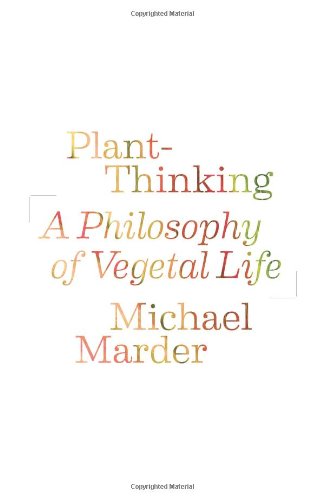
“As margens da filosofia são povoadas por seres vivos não-humanos e não animais, incluindo as plantas. Enquanto os filósofos contemporâneos tendem a abster-se de levantar questões ontológicas e éticas acerca da vida vegetal, Michael Marder coloca-a na vanguarda da desconstrução actual da metafísica. Ele identifica as características existenciais do comportamento das plantas e o património vegetal do pensamento humano, de modo a afirmar o potencial da vegetação na resistência à lógica da totalização e no ultrapassar dos estreitos limites da instrumentalidade. Reconstruindo a vida das plantas “depois da metafísica”, Marder centra-se na sua temporalidade única, liberdade e conhecimento ou sabedoria material. Na sua formulação, a “planta-pensamento” é o modo correcto não-cognitivo, não-ideacional e não-imagético, de pensar as plantas, tanto quanto o processo de trazer o próprio pensamento humano de volta às suas raízes, tornando como planta.”
in http://cup.columbia.edu/book/978-0-231-16124-4/plantthinking
http://www.michaelmarder.org/books/authored/
(tradução ildateresacastro).
Plant Thinking – A Philosophy of Vegetal Lif
Michael Marder . 2013
The margins of philosophy are populated by non-human, non-animal living beings, including plants. While contemporary philosophers tend to refrain from raising ontological and ethical concerns with vegetal life, Michael Marder puts this life at the forefront of the current deconstruction of metaphysics. He identifies the existential features of plant behavior and the vegetal heritage of human thought so as to affirm the potential of vegetation to resist the logic of totalization and to exceed the narrow confines of instrumentality. Reconstructing the life of plants “after metaphysics,” Marder focuses on their unique temporality, freedom, and material knowledge or wisdom. In his formulation, “plant-thinking” is the non-cognitive, non-ideational, and non-imagistic mode of thinking proper to plants, as much as the process of bringing human thought itself back to its roots and rendering it plantlike.
in http://cup.columbia.edu/book/978-0-231-16124-4/plantthinking
http://www.michaelmarder.org/books/authored/
.
Mudanças Climáticas nos Media: Relatórios de Risco e de Incerteza
James Painter . 2013
Cada vez mais os cientistas e políticos usam a linguagem do risco para descrever o desafio da mudança climática. Alguns investigadores afirmam que sublinhar os “riscos” da mudança climática em vez das ‘incertezas’ pode criar um contexto de maior utilidade para os decisores políticos e uma mais forte resposta do público. Mas entender os conceitos de risco e de incerteza – e o modo de os comunicar – tem sido um assunto muito debatido. Neste livro, James Painter analisa como os media internacional apresentam estas e outras narrativas em torno das alterações climáticas. Ele concentra-se na cobertura de relatórios do Painel Intergovernamental sobre Mudanças Climáticas (IPCC) e do degelo do Oceano Ártico, e inclui seis países, Austrália, França, Índia, Noruega, Reino Unido e EUA.
(tradução ildateresacastro)
Climate Change in the Media: Reporting Risk and Uncertainty
James Painter . 2013
Scientists and politicians are increasingly using the language of risk to describe the climate change challenge. Some researchers say stressing the ‘risks’ from climate change rather than the ‘uncertainties’ can create a more helpful context for policy makers and a stronger response from the public. But understanding the concepts of risk and uncertainty – and how to communicate them – is a hotly debated issue. In this book, James Painter analyses how the international media present these and other narratives around climate change. He focuses on coverage of reports by the Intergovernmental Panel on Climate Change (IPCC) and of the melting ice of the Arctic Sea, and includes six countries, Australia, France, India, Norway, the UK and the USA.
.
A Pegada Cinemática: Luzes, Câmera, Recursos Naturais
Nadia Bozak . 2011

O filme tem sido muitas vezes usado para representar a paisagem natural e para comunicar mensagens ambientalistas. No entanto, mesmo por trás as imagens “verdes” mostradas na tela são ecologicamente processos de produção e de distribuição insustentáveis . Notando que o celulóide é muitas vezes composto de derivados de petróleo, The Cinematic Footprint (A Pegada Cinematográfica) traça a história de como a “imaginação de hidrocarbonetos” tem sido fundamental para o desenvolvimento do cinema como meio. A fusão inovadora de Nadia Bozak entre os estudos de cinema e os estudos ambientais, leva-a a fazer conexões provocadoras entre o desaparecimento dos recursos materiais e o surgimento dos media digitais, com exemplos que vão desde o presciente olho de Dziga Vertov no cinema inicial ou as experimentações analógicas de Chris Marker, ao trabalho digital de Agnés Varda, James Benning e Zacharias Kunuk . Combinando uma análise da tecnologia do cinema com uma consideração sensível da estética do filme, The Cinematic Footprint oferece uma nova perspectiva entre as imagens em movimento e os recursos naturais que as sustentam.
(tradução ildateresacastro)
.
The Cinematic Footprint : Lights, Camera, Natural Resources
Nadia Bozak . 2011
Film has often been used to represent the natural landscape and to communicate environmentalist messages. Yet behind even the “green” images shown on screens are ecologically unsustainable production and distribution processes. Noting that celluloid is often composed of petroleum byproducts, The Cinematic Footprint traces the history of how the “hydrocarbon imagination” has been central to the development of film as a medium. Nadia Bozak’s innovative fusion of film studies and environmental studies leads her to make provocative connections between the disappearance of material resources and the emergence of digital media-with examples ranging from early cinema to Dziga Vertov’s prescient eye, from Chris Marker’s analog experiments to the digital work of Agnés Varda, James Benning, and Zacharias Kunuk. Combining an analysis of cinema technology with a sensitive consideration of film aesthetics, The Cinematic Footprint offers a new perspective between moving images and the natural resources that sustain them.
in http://isle.oxfordjournals.org/content/19/3/587.extract
.
Respeito pela Natureza: Uma Teoria da Ética Ambiental
Paul W. Taylor . 2011 (com um novo prefácio de Dale Jamieson)

Que justificação racional existe para conceber todos os seres vivos como possuindo valor intrínseco? Em Respect for Nature (Respeito pela Natureza), Paul Taylor baseia-se na biologia, filosofia moral e ciências ambientais para defender uma ética ambiental biocêntrica, em que toda a vida tem valor. Sem fazer reivindicações sobre os direitos morais de plantas e animais, ele oferece uma fundamentada alternativa à visão antropocêntrica predominante em que o ambiente natural e a sua vida selvagem são avaliados apenas como objetos de uso ou de prazer humano. Respect for Nature (Respeito pela Natureza) fornece um relato completo das condições biológicas para a vida humana e não-humana, e uma visão abrangente da complexa relação entre os seres humanos e toda a Natureza.
(tradução ildateresacastro).
Respect for Nature: A Theory of Environmental Ethics (25th Anniversary Edition)
Paul W. Taylor . 2011 (with a new foreword by Dale Jamieson)
What rational justification is there for conceiving of all living things as possessing inherent worth? In Respect for Nature, Paul Taylor draws on biology, moral philosophy, and environmental science to defend a biocentric environmental ethic in which all life has value. Without making claims for the moral rights of plants and animals, he offers a reasoned alternative to the prevailing anthropocentric view–that the natural environment and its wildlife are valued only as objects for human use or enjoyment. Respect for Nature provides both a full account of the biological conditions for life–human or otherwise–and a comprehensive view of the complex relationship between human beings and the whole of nature.
in http://press.princeton.edu/titles/9444.html
.
.
O Princípio Weyekin: Rumo a uma Retórica Crítica Incorporada
Michael Salvador & Tracylee Clarke . 2011

Este ensaio oferece o princípio weyekin para os dualismos humano-Natureza encontrados em grande parte da nossa teoria e criticados por um número crescente de estudiosos da comunicação ambiental. Os autores isolam dois requisitos fundamentais na transformação do nosso compromisso com o não-humano: primeiro, uma maneira de atender ou interpretar os fenómenos naturais que abre a nossa consciência ao outros-mais-que-simbólico modos de experiência e, segundo, uma crítica encarnada que expressa as tensões inerentes ao interface simbólico-material.
(tradução ildateresacastro).
The Weyekin Principle: Toward an Embodied Critical Rhetoric
Michael Salvador & Tracylee Clarke . 2011
This essay offers the weyekin principle to address the symbol–material, human–nature dualisms found in much of our theory and critiqued by a growing number of environmental communication scholars. The authors see two core requirements for transforming our engagement with the nonhuman: first, a way of attending to or interpreting natural phenomena that opens our awareness to other-than-symbolic modes of experience; and second, an embodied critique that expresses the inherent tensions of the symbolic–material interface.
in http://www.tandfonline.com/doi/abs/10.1080/17524032.2011.586713#.UwJoQF7BmcY
.
.
Tamera – Um Modelo Para o Futuro
Leila Dregger . 2010
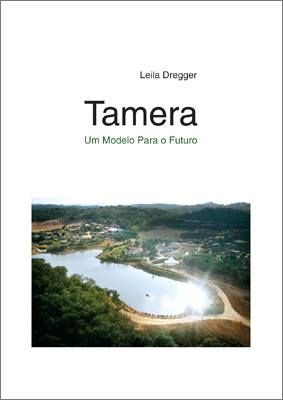
“Este livro procura esclarecer o estado actual de trabalho em Tamera, incidindo em três áreas centrais: Permacultura e a Paisagem Aquática, Tecnologia Solar e Formação de Paz. (…) Há mais de 30 anos uma equipa de pioneiros em torno do psicanalista Doutor Dieter Duhm, da teóloga Sabine Lichtenfels e do engenheiro e físico Charly Rainer Ehrenpreis tiveram a ideia de criar um modelo demonstrativo para o futuro, tão flexível, concreto e convincente quanto possível.
A partir dessa ideia e, em conjunto com a sua rede internacional, foi desenvolvido em Portugal e no Alentejo, o projecto Tamera de pesquisa para a paz.
Este livro procura esclarecer o estado actual de trabalho em Tamera, incidindo em três áreas centrais: Permacultura e a Paisagem Aquática, Tecnologia Solar e Formação de Paz.”
in Verlag Meiga
.

Este livro proporciona uma visão definitiva dos novos desenvolvimentos da religião e ecologia. As duas últimas décadas viram emergir um novo campo de estudo académico que analisa a interação entre religião e ecologia. Teólogos de todas as tradições religiosas têm confrontado atitudes do passado das religiões mundiais para com a Natureza e reconhecido aí uma cumplicidade com a crise ambiental. Desse confronto nasceram novas teologias vitais baseadas na recuperação de elementos marginalizados na tradição, críticas profundas do passado, e visões ecologicamente orientadas de Deus, do Sagrado, da Terra e dos seres humanos. Dividido em três secções principais, este livro reflete as três dimensões dominantes deste campo. Parte Um explora conceitos religiosos tradicionais de e atitudes para com a Natureza e como estes foram alterados pela crise ambiental. Part Dois olha para questões conceituais maiores que transcendem as tradições individuais. Parte Três examina a participação religiosa na política ambiental.
(tradução ildateresacastro)
.
The Oxford Handbook of Religion and Ecology
Edited by Roger S. Gottlieb . 2006
This book provides a definitive overview of the exciting new developments in religion and ecology. The last two decades have seen the emergence of a new field of academic study that examines the interaction between religion and ecology. Theologians from every religious tradition have confronted world religions’ past attitudes towards nature and acknowledged their own faiths’ complicity in the environmental crisis. Out of this confrontation have been born vital new theologies based in the recovery of marginalized elements of tradition, profound criticisms of the past, and ecologically oriented visions of God, the Sacred, the Earth, and human beings. Divided into three main sections, this book reflects the three dominant dimensions of the field. Part One explores traditional religious concepts of and attitudes towards nature and how these have been changed by the environmental crisis. Part Two looks at larger conceptual issues that transcend individual traditions. Part Three examines religious participation in environmental politics.
in http://www.oxfordhandbooks.com/view/10.1093/oxfordhb/9780195178722.001.0001/oxfordhb-9780195178722
.
Éticas e Políticas Ambientais
Cristina Beckert & Maria José Varandas (org.) 2003
“(…) Ser pessoa significa ser racional, e ser racional significa ter um grau de consciência suficiente para a entidade que a possui poder identificar-se a si própria como a mesma ao longo do tempo, de modo a recordar acontecimentos passados que assumem um cariz biográfico e a projectar acontecimentos futuros cuja condição de possibilidade é, precisamente, a permanência da e na vida ou a recusa da morte.” (pp.45)
Estando estas características presentes nos primatas e nos mamíferos, embora mais duvidosa a sua presença nas aves, Beckert sublinha que em relação aos animais não pessoas mas sencientes — peixes e répteis —, uma vez que não têm consciência de si e ligação ao passado e futuro, mas tão somente uma consciência instantânea — que afasta a possibilidade de desejo de permanecer vivo no instante seguinte —, o critério ético deve ser o de não infligir sofrimento, ainda que não se revelem impedimentos morais a que sejam mortos de forma indolor. Deste conceito de pessoa, se infere a condenação do consumo de animais na alimentação, no vestuário e no calçado. Por sua vez, os seres não-sencientes apesar de não terem capacidade de sofrer merecem igualmente respeito, i.e., pelo facto de existirem têm valor que deve ser preservado.»
Ilda Teresa Castro, Eu Animal – a ordem do fílmico na consciencialização ecocritica e na mudança de paradigma, 55.
.
Ética Ambiental, uma ética para o futuro
Cristina Beckert (org.) 2003

“As grandes éticas universais, os grandes projectos para o ser humano sempre contaram com a Terra, com o oikos, como um pressuposto, se não imutável, pelo menos inquestionável na sua duração e estabilidade. A crise do ambiente, como crise desse pressuposto, dessa casa, é também a crise de uma certa ideia de humano. E não será errado considerar que com a crise do ambiente é também essa ideia de humano que está em risco de extinção.”
Viriato Soromenho Marques, “Crise Ambiental e condição humana”, in Ética ambiental – uma ética para o futuro, de Cristina Beckert (org.), 2003.
.
. Natureza e Ambiente: representações na cultura portuguesa Cristina Beckert (org.) . 2001
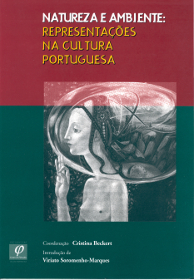
As actas do Colóquio Natureza e Ambiente: Representações na Cultura Portuguesa (1998) confrontam o leitor com abordagens díspares da Natureza e do Ambiente tendo como horizonte de referência a cultura portuguesa, nas suas manifestações populares, literárias, filosóficas ou científicas. Tratando temáticas como a crise ambiental, a elaboração filosófica de uma visão unitária que engloba a Natureza, o humano e o divino, a história do movimento ambientalista em Portugal ou o exame sociológico das questões ambientais nos media, este volume contribui decisivamente para a elucidação da relação do homem com a natureza e o ambiente no horizonte da cultura portuguesa.
http://www.centrodefilosofia.com/publicacaodetalhe.php?id=61 . .
David Abram . 1996
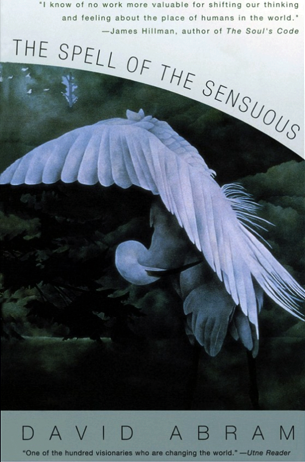
“Nessas culturas indígenas, a solidariedade entre a linguagem e a paisagem animada é palpável e evidente. Segundo Ogotemmêli, um ancião da tribo Dogon, do Mali, a linguagem falada era originalmente uma veste turbilhonante de vapor e respiração usada pela própria terra que tudo abrange. Mais tarde, essa veste foi roubada pelo chacal, um animal cujos movimentos, desde essa altura, desvendaram a fala profética do mundo aos videntes e aos adivinhos. Muitas tribos, como os Swampy Cree de Manitoba, sustentam que a linguagem falada lhes foi dada pelos animais. Para os Inuits (esquimós), tal como para numerosos outros povos, os humanos e os animais falavam todos originariamente a mesma língua. Segundo Nalungiaq, uma mulher inuit entrevistada pelo etnólogo Knud Rasmussen no princípio do século vinte:
Nos mais recuados dos tempos
quando pessoas e animais viviam na terra,
uma pessoa podia transformar-se num animal se o desejasse
e um animal podia transformar-se num ser humano.
Por vezes eram pessoas
e por vezes animais
e não havia diferença.
Todos falavam a mesma língua.
era o tempo em que as palavras eram como magia.
O espírito humano tinha poderes misteriosos.
Uma palavar dita por acaso
podia ter estranhas consequências.
Subitamente, ganhava vida,
e podia acontecer o que as pessoas queriam que acontecesse –
tudo o que tinhas de fazer era dizê-la.
Ninguém era capaz de explicar isto:
Era como era.”
David Abram, A Magia do Sensível, 90.
. . Les Trois Écologies Félix Guattari . 1989
«Assim, para onde quer que nos voltemos, reencontramos esse mesmo paradoxo lancinante: de um lado, o desenvolvimento contínuo de novos meios técnico-científicos potencialmente capazes de resolver as problemáticas ecológicas dominantes e determinar o reequilíbrio das actividades socialmente úteis sobre a superfície do planeta e, de outro lado, a incapacidade das forças sociais organizadas e das formações subjectivas constituídas de se apropriar desses meios para torná-los operativos.»
Félix Guattari, Les Trois Ecologies, 12.
(tradução ildateresacastro)
(Natureza e Espírito . ed. D. Quixote. 1987)
Gregory Bateson . 1979

“Eu perguntava: Qual a diferença entre o mundo de pleroma, onde forças e colisões proporcionam bases suficientes para uma explicação, e a creatura, onde nada pode ser compreendido sem se recorrer às diferenças e distinções?
«Quebrem o padrão que liga todas as rúbricas do conhecimento e destruirão necessariamente toda a qualidade»
Que padrão liga o caranguejo à lagosta, a orquídea ao narciso e todos os quatro a mim? E a mim a vocês? E a nós os seis e à amiba por um lado, e ao mais escondido esquizofrénico por outro?
O que é preciso dizer agora é difícil, parece-me ser inteiramente vazio, e é de grande e profunda importância para mim e para vocês. Nesta conjuntura histórica penso que é importante para a sobrevivência de toda a biosfera, a qual como sabem, está ameaçada. Qual é o padrão que liga todas as coisas vivas?”
Gregory Bateson, Natureza e Espírito, 17.
–
“«Break the pattern which connects the items of learning and you necessarily destroy all quality.»
I offer you the phrase the pattern which connects as a synonym, another possible title for this book.
The pattern which connects. Why do schools teach almost nothing of the pattern which connects? Is it that teachers know that they carry the kiss of death which will turn to tastelessness whatever they touch or teach anything of real-life importance? Or is it that they carry the kiss of death because they dare not teach anything of real-life importance? What’s wrong with them?
What pattern connects the crab to the lobster and the orchid to the primrose and all the four of them to me? And me to you? And all the six of us to the amoeba in one direction and to the back-ward schizophrenic in another?”
Gregory Bateson, Mind and Nature, 18.
http://www.oikos.org/mind&nature.htm
.
Steps to an ecology of Mind
Gregory Bateson . 1972
“a mente individual não é imanente apenas no corpo. É imanente também em mensagens e percursos fora do corpo; e existe uma Mente alargada na qual a mente individual é apenas um subsistema. Esta Mente alargada é comparável a Deus e é talvez o que algumas pessoas consideram “Deus”, mas é ainda imanente no interconectado todo formado pelo sistema social e ecologia planetária”
Gregory Bateson, Steps to a Ecology of Mind, 467
(tradução ildateresacastro)
.
Gemeinnüzzige Naturgeschichte des Thierreichs : darinn die merkwürdigsten und nüzlichsten Thiere in systematischer Ordnung beschrieben und alle Geschlechter in Abbildungen nach der Natur vorgestellet werden / ausgefertigt von D. Georg Heinrich Borowski …

.
 ecomedia . ecocriticismo . ecocinema