acompanhe a publicação regular de chamadas de trabalhos / for the regular publication of call for works ⇒ ⇒ ⇒ ⇒ ⇒ ⇒ ⇒ ⇒ ⇒ ⇒ ⇒ ⇒ ⇒ ⇒ ⇒ ⇒ ⇒ ⇒ ⇒ ⇒ ⇒ ⇒ ⇒ ⇒ follow us on facebook
.
.
.
Ruinae, Mara Morgado
(ano XII . no XV . 2025)
Paz_Mulher_Natureza _ Peace_Woman_Nature I Sarau Kino Poíesis SKP#1, Ilda Teresa Castro
(10 Anos . 10 Years. 2024 – 2025)
Novas Perspectivas no Pensamento Utópico ? conversa com Patrícia Vieira*, a propósito da colecção editorial Future Perfect: Images of the Time to Come in Philosophy, Politics and Cultural Studies da Rowman and Littlefield e do livro Existential Utopia: New Perspectives on Utopian Thought / / New Perspectives on Utopian Thought ? interview with Patrícia Vieira* on the book series Future Perfect: Images of the Time to Come in Philosophy, Politics and Cultural Studies at Rowman and Littlefield and on the book Existential Utopia: New Perspectives on Utopian Thought, Ilda Teresa Castro
(ano I . no IV . 2014)
.
.
.
Ruinae
Mara Morgado
.
Vivemos ainda inseridos em sociedades patriarcais e capitalistas, cada vez mais longe dos saberes cíclicos e naturais; onde se escapa furiosamente à energia feminina, inerente a todos nós. A tentativa de uma vida linear e não cíclica, onde a terra e os corpos femininos adoecem, onde pelo mundo se continuam a explorar, apropriar, abusar e assassinar, estes corpos. Esta peça surgiu não só desta dor, mas desta energia feminina que fala sobre toda a humanidade, sobre a vida, sobre o equilíbrio e a temperança. Esta energia está em decadência, o que resulta nas guerras e nas catástrofes imensas que presenciamos hoje em dia. Este luto coletivo e esta ruína sussurram: os saberes de outro tempo, uma ligação com a terra diferente; uma semente de vida, fertilizada de todo o sangue que tem sido jorrado.
Ruinae mergulha na relação de perda e esperança e retrata a força misteriosa da vida, inabalável e enigmática, ímpeto ancestral que teima em nascer perante as adversidades.
Ruinae é tecido como projeto de resgate interno e coletivo, guiado através de processos de dança e rituais ancestrais femininos.
A peça procura a relação-espelho mulher-natureza e o desejo por uma vivência consciente e ecológica. Uma consciência coletiva pelas ruínas da terra. Uma relação de respeito e co-criação com as paisagens naturais.
Dança-se os ossos para acordar os vivos.
Esculpe-se uma coluna vertebral, serpente que transmuta e invoca uma construção de novas vértebras estruturantes que carregam um caminhar mais pleno. Procura-se o transe que os ossos precisam de dançar para se segurarem perante uma verticalidade de esquecimento: uma humanidade que esqueceu a sua ligação com o corpo, com os ciclos e com a terra. Porém, existe a memória arquivada nos ossos — e a ruína é uma ponte. Explora-se então o resgate das ruínas-pontes da história do mundo, abordado o tema do Ecofeminismo como uma possível travessia.
.

.
sinopse
“Paisagem desértica com rasto.
Choro coletivo que limpa as cinzas.
Arquiteturas esquecidas que guardam as histórias.
Testemunhas silenciosas do passado e portais do tempo.
Lamento esperançoso entre o que se perdeu e o que da destruição brotará.
A poética da ruína, da mulher e da terra.
A relação de perda e esperança.
A violência frágil entre o cadáver que ainda jorra sangue, entre o corpo desnutrido que ainda canta, entre o que já não tem carne mas ainda corre, o que foi queimado e ainda dança.
O transe da memória que os ossos precisam de dançar para se sustentarem perante uma verticalidade de esquecimento. Uma humanidade que esqueceu o caminho para casa.
A força do suave, do descanso, da morte.
Brotos que da matéria morta, vivem e se desenvolvem.
Albergar as palavras esquecidas para que elas floresçam. Reaprender a espera em solo fértil.”
.
Esta peça terá a sua estreia a 11 de Outubro na Floresta de Monsanto em Lisboa inserida no programa do Festival Silvestre — Ordem do O.
.
Ficha técnica e artística:
Criadora: Mara Morgado
Interpretação: Bruna Rocha, Mara Morgado,
Vera Eva Ham, Carolina Carloto
Composição Musical : Marta Mar e Mara Morgado
Piano: Maria do Mar
Consultor artístico: Pedro Ramos
Arqueologia do movimento e danças ancestrais: Vera Eva Ham
Figurinos: Victor Alves da silva
Cenografia: João Alves, Filipa Saavedra e Mara Morgado
Desenho de luz: José Coelho
Produção: Ana Cano
.
Apoio: Ordem do O , Vale do Rossim, ILÚ, Budadharma, Corpomedicina, CasavilaFlôr, Passos e Compassos, CM Palmela, O lugar do Meio, Alma D’Arame, Pé de Pano, Teatro Cine de Gouveia, Antena 2, Companhia Olga Roriz, Teatro da Comuna, Eco-life Experience
.
*Mara Morgado inicia o seu estudo na dança clássica aos 3 anos e na dança contemporânea aos 12. Frequenta em simultâneo a Associação ADN- Armazém 13 e Chapitô, onde aprende artes circenses. Forma-se em Realização Plástica do Espetáculo na Escola Artística António Arroio onde trabalha em colaboração com CCB-Fábrica das artes. Em 2019-2020 faz parte da FOR – Companhia Olga Roriz e em 2021- 2022, da Formação profissional- Performact, onde tem contacto com vários coreógrafos do mundo. Durante este percurso, começa o seu trabalho com o coreógrafo e bailarino Pedro Ramos, com quem atualmente trabalha. Tira uma formação com Dina Fonseca em Dança Terapia e lança o seu projeto “Laboratório do Corpo “- jornada imersiva de consciência e exploração corporal artística e ecológica. Resgata a fotografia artística e videoarte, em torno do corpo feminino na natureza e dos fósseis do tempo.
.
.
Ruinae
Mara Morgado
.
We still live in patriarchal and capitalist societies, increasingly distant from cyclical and natural knowledge; where the feminine energy inherent in all of us is furiously escaping. The attempt at a linear, non-cyclical life, where the earth and female bodies become ill, where these bodies continue to be exploited, appropriated, abused, and murdered throughout the world. This piece emerged not only from this pain, but from this feminine energy that speaks to all of humanity, to life, to balance and temperance. This energy is in decline, resulting in the wars and immense catastrophes we witness today. This collective mourning and this ruin whisper: the knowledge of another time, a different connection with the earth; a seed of life, fertilized by all the blood that has been shed.
Ruinae delves into the relationship between loss and hope and portrays the mysterious force of life, unshakable and enigmatic, an ancestral impetus that insists on being born in the face of adversity.
Ruinae is woven as a project of internal and collective rescue, guided by dance processes and ancestral feminine rituals.
The piece seeks the mirror-like relationship between woman and nature and the desire for a conscious and ecological experience. A collective consciousness for the ruins of the earth. A relationship of respect and co-creation with natural landscapes.
The bones are danced to awaken the living.
A spinal column is sculpted, a serpent that transmutes and invokes the construction of new, structuring vertebrae that carry a fuller path. The trance that the bones need to dance is sought to hold themselves aloft in the face of a verticality of oblivion: a humanity that has forgotten its connection to the body, to cycles, and to the earth. However, there is memory stored in the bones—and the ruin is a bridge. The work explores the recovery of the ruined bridges of world history, addressing the theme of ecofeminism as a possible crossing point.
.
.
sinopse
A desert landscape with a trail.
A collective cry that clears the ashes.
Forgotten architectures that hold stories.
Silent witnesses of the past and portals of time.
A hopeful lament between what has been lost and what will spring from destruction.
The poetics of ruin, of woman, and of the earth.
The relationship between loss and hope.
The fragile violence between the corpse that still spurts blood, between the malnourished body that still sings, between what no longer has flesh but still runs, what was burned and still dances.
The trance of memory that bones need to dance to sustain themselves in the face of a verticality of oblivion. A humanity that has forgotten the way home.
The strength of the gentle, of rest, of death.
Sprouts that from dead matter live and develop.
Sheltering forgotten words so they may flourish. Relearning to wait in fertile soil.
.
This piece will premiere on October 11th at the Monsanto Forest in Lisbon, as part of the Silvestre Festival program – Ordem do O.
.
Technical and artistic profile:
Creator: Mara Morgado
Interpretation: Bruna Rocha, Mara Morgado,
Vera Eva Ham, Rita Carpinteiro e Maria Barreto
Musical composition: Marta Mar and Mara Morgado
Piano: Maria do Mar
Artistic consultant: Pedro Ramos
Archaeology of movement and ancestral dances: Vera Eva Ham
Costumes: Victor Alves da Silva
Scenography: João Alves, Filipa Saavedra, and Mara Morgado
Text: Mara Morgado
Lighting design: José Coelho
Production: Ana Cano
.
Support: Ordem do O, Vale do Rossim, ILÚ, Budadharma, Corpomedicina, CasavilaFlôr, Passos e Compassos, CM Palmela, O lugar do Meio, Alma D’Arame, Pé de Pano, Teatro Cine de Gouveia, Antena 2, Companhia Olga Roriz, Teatro da Comuna, Eco-life Experience
.
*Mara Morgado began studying classical dance at age 3 and contemporary dance at age 12. She simultaneously attended the ADN-Armazém 13 and Chapitô Associations, where she learned circus arts. She graduated in Scenography at António Arroio Artistic School, where she collaborated with CCB-Fábrica das Artes. From 2019 to 2020, she did the Formation- FOR – Companhia Olga Roriz, and from 2021 to 2022, the Professional Training – Performact program, where she interacted with several choreographers from around the world. During this journey, she began working with choreographer and dancer Pedro Ramos, with whom she currently collaborates. She trained with Dina Fonseca in Dance Therapy and launched her project “Laboratório do Corpo” (Body Laboratory) – an immersive journey of artistic and ecological body awareness and exploration. She explores artistic photography and video art, focusing on the female body in nature and the fossils of time.
.
.
.
Paz_Mulher_Natureza . Sarau Kino Poíesis SKP#1
Peace_Woman_Nature . Sarau Kino Poíesis SKP#1
Ilda Teresa Castro
.
GLOSSÁRIO breve / brief GLOSSARY:
KINO — relativo ao cinema ou cinema sofisticado / related to cinema or sophisticated cinema.
LABORATÓRIO / LABORATORY — espaço de experimentação e pesquisa / a space for experimentation and research.
POÍESIS — ideia de criar ou fazer que advém do grego poiein, por criar, com sufixo –sisreferente a acção. Desde Aristóteles, refere o impulso do espírito humano para criar algo a partir da imaginação e dos sentimentos / the idea of creating or making, derived from the Greek poiein (to create), with the suffix -sis referring to action. Since Aristotle, it has signified the human spirit’s impulse to create something from imagination and emotions.
SARAU — evento onde as pessoas se encontram para se expressar artisticamente / an event where people gather to express themselves artistically.
WORK IN PROGRESS — projecto em desenvolvimento / a project in development.
.
.
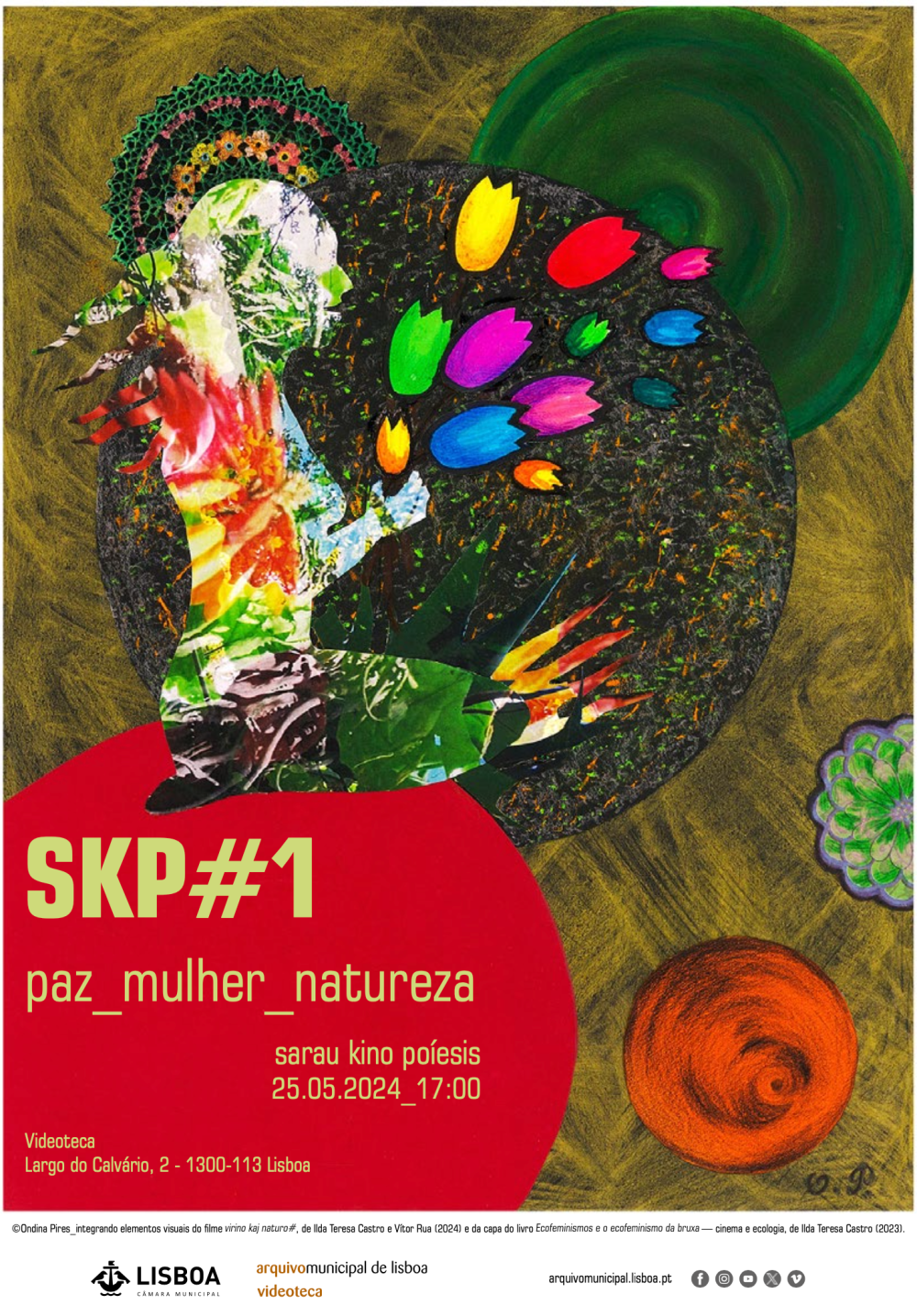
SARAU KINO POÍESIS_SKP# é um Espaço/Tempo de encontro de Artes e Artistas, programado por Ilda Teresa Castro, constituído por 3 Laboratórios: o Kino Lab, o Kino Book e o Poetik Kreative Lab.
Assinalando o Dia Internacional da Mulher para a Paz e o Desarmamento, o segundo SARAU KINO POÍESIS SKP#1, vai acontecer no sábado 25 de maio sob o tema Paz_Mulher_Natureza.
Esta segunda sessão SKP#, prossegue o plano prévio executado no SKP#0, e partindo do próprio conceito de Poíesis, de Criar ou Fazer, aqui em Encontros Criativos, mapeia-se em 3 momentos distintos:
o Kino Lab, um Laboratório Fílmico com visionamento comentado, que pode integrar filmes em preparação ou em fase de pós-produção, ou ainda filmes que se encontrem em percurso de festivais, destacando obras da produção audiovisual recente, obras relacionadas com a cidade de Lisboa e obras sui generis relacionadas com a temática de cada sessão;
o Kino Book, um Laboratório Literário com a apresentação comentada de livros que integrem ou passem a integrar a Biblioteca da Videoteca, destacando obras recentes e obras relacionadas com o tema de cada sessão,
e o Poíesis Kreative Lab, um Laboratório Criativo, um Espaço/Tempo de Poíesis, de Criar ou Fazer, nas seguintes vertentes: a Palavra; a Criação Visual; a Criação Audiovisual; a Criação Sonora; e a Performance.
O SARAU KINO POÍESIS_SKP# tem por Missão ir ao encontro das actuais necessidades de encontro, e de experimentação e criação conjunta, da comunidade artística lisboeta, contribuindo — com espaço, condições técnicas e recursos —, para o desenvolvimento do trabalho criativo da própria comunidade cultural na cidade de Lisboa, num momento chave em que a hipertecnologia por um lado, e a gentrificação por outro, dificultam de modo imperativo estes processos de reflexão e de construção de imaginários, imprescindíveis para a cultura da nossa cidade e país.
_entrada sujeita a marcação prévia
.
SARAU KINO POÍESIS_SKP# is a Space/Time for the encounter of Arts and Artists, curated by Ilda Teresa Castro, structured into three Laboratories: Kino Lab, Kino Book, and Poetik Kreative Lab.
Marking the International Women’s Day for Peace and Disarmament, the second SARAU KINO POÍESIS SKP#1 will take place on Saturday, 25th May, under the theme Peace_Woman_Nature.
This second SKP# session continues the previous plan executed in SKP#0. Rooted in the very concept of Poíesis—the act of Creating or Making—this edition unfolds into three distinct moments:
Kino Lab: A Filmic Laboratory featuring a commented screening, which may include films in development or post-production, as well as works currently circulating in film festivals. The focus is on recent audiovisual productions, films related to the city of Lisbon, and sui generis works aligned with the theme of each session.
Kino Book: A Literary Laboratory dedicated to the presentation and discussion of books that either belong to or will be integrated into the Videotheque Library. It highlights recent publications and works that resonate with the session’s theme.
Poíesis Kreative Lab: A Creative Laboratory, a Space/Time for Poíesis—for Creating or Making—across the following artistic dimensions: Word, Visual Creation, Audiovisual Creation, Sound Creation, and Performance.
The SARAU KINO POÍESIS_SKP# aims to address the current need for artistic encounters, experimentation, and collaborative creation within Lisbon’s artistic community. By providing space, technical conditions, and resources, it contributes to the development of the city’s cultural scene at a crucial moment—when hyper-technology, on one hand, and gentrification, on the other, increasingly hinder these essential processes of reflection and the construction of collective imagination, fundamental to the culture of our city and country.
_entry by prior booking only
.
* Ilda Teresa de Castro é música, cineasta, artista visual, poeta, curadora e investigadora. Formada em Cinema e Arte, Doutorada em Ecocinema e Ecocritica, Pós-doutorada em Arte e Ecologia. No domínio ecocritico é autora de Ecofeminismos e o ecofeminismo da bruxa – cinema e ecologia (2023), e de Eu Animal — argumentos para uma mudança de paradigma – cinema e ecologia (2015). Enquanto eco-artista tem apresentado instalações e ecofilmes em diversos países. Fundadora (2014) e editora da plataforma e revista digital Animalia Vegetalia Mineralia ecomedia_ecocriticismo_ecocinema. É autora dos libretos das eco-óperas Descartes Nunca Viu Um Macaco (2017) e Virino Kaj Naturo# (Mulher & Natureza) (2023). É curadora do Sarau Kino Poiesis SKP#.
* Ilda Teresa de Castro is a musician, filmmaker, visual artist, poet, curator, and researcher. She holds a degree in Cinema and Art, a PhD in Ecocinema and Ecocriticism, and a postdoctoral qualification in Art and Ecology. In the ecocritical field, she is the author of Ecofeminismos e o ecofeminismo da bruxa – cinema e ecologia (2023) and Eu Animal — argumentos para uma mudança de paradigma – cinema e ecologia (2015). As an eco-artist, she has presented installations and ecofilms in various countries. Founder (2014) and editor of the digital platform and magazine Animalia Vegetalia Mineralia ecomedia_ecocriticism_ecocinema. She wrote the librettos for the eco-operas Descartes Nunca Viu Um Macaco (2017) and Virino Kaj Naturo# (Woman & Nature) (2023). She is the curator of Sarau Kino Poíesis SKP#.
.
.
.
.
No próximo 27 de Outubro 2023, Dia Internacional do Audiovisual, a Videoteca Municipal de Lisboa, comemora com o lançamento da segunda edição do Festival de Ecocinema Lisboa Natura, convidando assim todas as pessoas envolvidas na criação audiovisual, a preparar os seus filmes sobre o Mundo Natural de Lisboa.
Esta segunda edição contempla Médias e Longas-Metragens, Curtas-Metragens, Filmes Emergentes e um Prémio do Público. Conta também com prémios de valor.
Todo o sector audiovisual está convidado à festa e convidado a participar.
Mais notícias brevemente.
nota de 2025: apesar desta notícia, o projecto realizado em 2020
está suspenso.
a Animalia Vegetalia Mineralia editou um artigo sobre a edição de 2020
em Lisboa Natura _ festival ecovideo em tempo de pandemia _ o quê, porquê e para quê
aceda ao Catálogo e ao Arquivo Ecovideográfico da edição de 2020
.
.
.
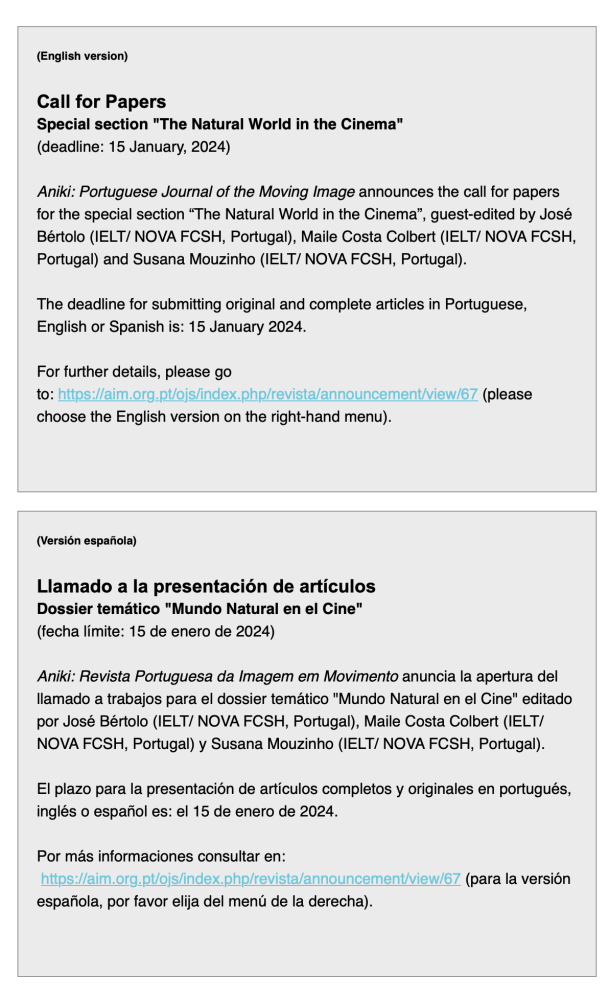
CFP: O Mundo Natural no Cinema (prazo: 15 Janeiro 2024)
Aniki: Revista Portuguesa da Imagem em Movimento

Este dossier temático procura mapear as relações entre o cinema e o que designamos como ‘mundo natural’, reconhecendo o humano como elemento mediador dessa articulação, mas respondendo e reagindo, também, à tendência geral para o antropocentrismo que se encontra quer na produção cinematográfica, quer na pluralidade das abordagens críticas canonizadas no âmbito dos estudos fílmicos. O dossier promoverá uma discussão alargada desta problemática, sem se reger por nenhum foco geográfico, temporal ou genológico específico. Assim, pretende-se aferir e caracterizar a heterogeneidade e a riqueza das configurações que o natural tem obtido na história do cinema, tanto na ficção quanto no documentário e em formas híbridas, e tanto em obras que se enquadram explicitamente no campo da ecocrítica quanto noutras obras que, ainda que não o fazendo de forma explícita, contêm um subtexto ecológico que potencia uma perspectiva ecocinematográfica.
Por um lado, a reflexão desenvolvida no âmbito deste dossier versará sobre os modos como o cinema apresenta animais, plantas, fungos, os elementos, etc. Por outro lado, ela debruçar-se-á sobre os meios pelos quais o cinema pode questionar e transformar estes habitantes e elementos não-humanos do planeta, bem como as dinâmicas de poder e de influência que os humanos mantêm com eles. A acentuada amplitude do debate comporta cruzamentos entre questões de ordem mais estritamente filosófica ou estética e tópicos mais directamente associáveis ao ambientalismo e ao activismo político.
Inscrevendo-se no campo dos estudos fílmicos, este dossier temático beneficiará de métodos e epistemologias provenientes de outras áreas disciplinares, tais como a ecocrítica, a filosofia, o ecofeminismo, os estudos queer, ecologias da paisagem e da paisagem sonora, a biologia, a botânica, a geologia, entre outros.
Sugestões de reflexão: Documentarismo e filme de Natureza; Poéticas da contemplação; A temporalidade do cinema e do mundo natural; Extinção e preservação; Natureza e géneros cinematográficos (cli-fi, eco-horror, disaster film, slow cinema, etc.); Antropocentrismo e o ponto de vista não-humano ou mais-do-que-humano; Metamorfoses do natural; Natureza e paisagens sonoras; Cinema e políticas ambientais; Práticas da imagem em movimento activistas não-ocidentais; Cinema experimental e vídeo-arte.
Este dossier temático é coordenado por José Bértolo (IELT/ NOVA FCSH, Portugal), Maile Colbert (IFILNOVA/ NOVA FCSH, Portugal), e Susana Mouzinho (IFILNOVA/ NOVA FCSH, Portugal).
O prazo para a submissão de artigos completos e originais termina a 15 de Janeiro de 2024.
Mais informações aqui.
.
.
.
.Animals and Film
Antennae CFP – edited by Giovanni Aloi and Jonathan Burt
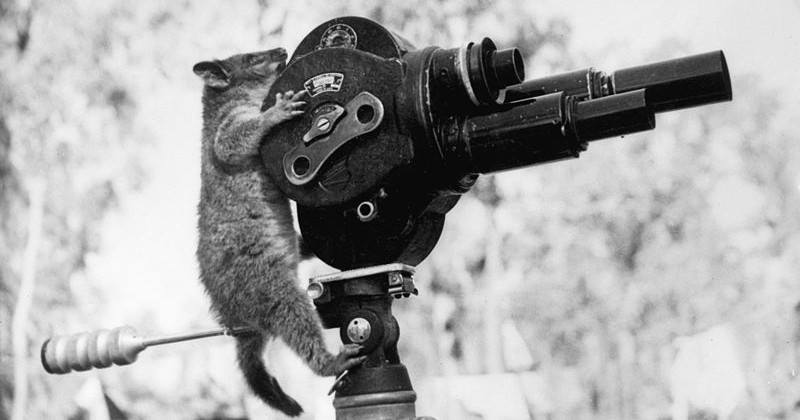
The centrality of animals to the history of film, and the particular powers and properties of the animal image on film require no introduction. For this issue of Antennae entirely dedicated to this subject we welcome proposals of all kinds but would be particularly interested in the following: the role of animals in contemporary and avant-garde film; the perspectives of artists/filmmakers and why they choose animal subject matter (whether centrally or peripherally); how filmmakers conceive of animals both symbolically and in relation to the technical questions they pose (and indeed the extent to which these two are interrelated); different kinds of filmmaking, whether amateur or professional, that work on the cusp between art and science, or art and politics. We would also very much welcome any contributions about or from non-Anglophone contexts, as well as comments on important and as yet untranslated texts such as Raymond Bellour’s Le Corps du Cinéma, for example. It is intended to build up from this an overview of the role of the animal film-image in recent years and to ask whether the proliferation of the literature of animals and culture in the last two decades has had an influence on animal representation in the moving image.
Academic essays = length 6000-10000 words (Please submit a 350 words abstract in the first instance)
Artists’ portfolio = 5/6 images along with 1000 words max statement/commentary
Interviews = maximum length 8000 words
Fiction = maximum length 8000 words
www.antennae.org.uk // email submissions at antennaeproject@gmail.com
deadline for abstracts: 1st of July 2016
finished pieces to be submitted by 1st of February 2017
.
.
.
Emoções, Humanos e Animais
Emotions, Humans and Animals
Vol. 1, No. 2 . July-December 2016
Pakistan Journal of Historical Studies,
published by Indiana University Press (Bloomington, IN, USA)
We invite submissions for the second issue of Pakistan Journal of Historical Studies (Vol. 1, No. 2, July-December 2016), a peer-reviewed, semi-annual research journal published by Indiana University Press (Bloomington, IN, USA). The theme for this issue is “Emotions, Humans and Animals”. We are interested in articles that explore the emotional relationships between humans and animals in any region and period. The issue is concerned with but not limited to the study of emotions reflected in social and cultural construction of animals in human societies; the use of animal signs for characterising human experiences and metaphysical and religious ideas; the association and disassociation of humans with animals in agrarian and industrialised societies; and innovative theoretical and methodological approaches for studying the emotions involved in human-animal relationships. We are also interested in works exploring the post-humanist approaches which historicize the emotional behaviour among animals by moving beyond constructionism.
deadline for submissions 01.06. 2016
.
.
.
.
The Ethics of Animal experimentation: towards a paradigm change
Ética da Experimentação Animal: no sentido de uma mudança de paradigma
Institute for Critical Animal Studies
deadline for submissions 31.01. 2016
.
.
.
Portuguese Literature and the Environment
Call for Papers
Portuguese Literature and the Environment
Patrícia Vieira & Victor K. Mendes, eds.
dead-line proposals: June 1, 2015
This co-edited book aims to explore the relationship between Portuguese literature and the environment. From the link between nature and poetry in the Medieval “cantigas,” through the bucolic verse of the Renaissance, all the way to the Romantic and post-Romantic nostalgia for a pristine natural or rural landscape under threat in the wake of industrialization, Portuguese literature has frequently reflected on the connection between humans and nature. More recently, neo-realism has returned to natural landscapes as the backdrop for social struggle, while the postcolonial turn in contemporary literature has highlighted the contrast between the environment of the former colonies and that of Portugal.
But nature has neither served merely as a setting for literary endeavors, nor as a simple cultural marker, separating colonizers and colonized. Portuguese writers have engaged directly with the environment in a myriad different ways and have incorporated nature in their texts not only to prompt social, political or philosophical reflections on human society, but also as a way to learn from the specific mode of being of our “others.” What can the natural environment, animals and plants, teach us? How can we represent nature aesthetically? And what does a nature-inflected writing look like?
For Portuguese Literature and the Environment, we encourage the submission of papers on the following topics, related to Portuguese literature:
- ecocritical readings of literary works;
- representations and uses of nature and landscape in literature;
- genres and conventions for describing and narrating the environment;
- animals and plants in literary texts;
- the environment in post-colonial literature;
- environmental readings and literary theory (formalism, structuralism, deconstruction,etc.);
- a Portuguese critique of Western anthropocentrism;
- ecocriticism and gender studies (including misogyny, homophobia and ecophobia);
- readings of the Portuguese countryside and the city after ecocriticism.To submit a paper proposal for this book, please e-mail both editors by June 1, 2015 with (i) a title, (ii) your name and institutional affiliation, and (iii) a 300-word abstract.
.
Book editors:
Patrícia Vieira, Georgetown University <piv2@georgetown.edu>
Victor K. Mendes, University of Massachusetts Dartmouth <vmendes@umassd.edu>
.
.
Novas Perspectivas no Pensamento Utópico ?
.  .
.
Conversa com Patrícia Vieira*, a propósito da colecção editorial Future Perfect: Images of the Time to Come in Philosophy, Politics and Cultural Studies da Rowman and Littlefield e do livro Existential Utopia: New Perspectives on Utopian Thought
por Ilda Teresa de Castro
A apresentação da colecção Future Perfect situa-a “na intersecção da historiografia crítica com a filosofia, a ciência política, a teoria económica heterodoxa e o pensamento ambiental, bem como com os estudos utópicos e culturais.” Existential Utopia foi publicado em 2011. Gostava de a convidar a falar sobre a utopia e o futuro:
o papel da utopia na modernidade
Quando Thomas More cunhou o termo “utopia” em 1516, inaugurou um novo género que está indissociavelmente ligado à modernidade. Tinha havido precursores do texto de More, tal como a descrição filosófica de uma sociedade ideal n A República, de Platão ou, num contexto teológico, a Cidade de Deus, de Agostinho, que contrastava com a corrupção da Cidade dos Homens. Mas as inumeráveis narrativas utópicas, escritas a partir do século 16 em diante, revelam a ligação entre a utopia e a mentalidade iniciada com Renascimento europeu e desenvolvida no Iluminismo.
Quais foram algumas das principais características do gênero? A postura crítica vis-à-vis a sociedade contemporânea, que contrastava fortemente com a mais perfeita política descrita nesses textos e, mais importante, o confiar que o presente pode e deve ser alterado, a fim de aproximar esse ideal desejável. Sustentando que cada utopia é uma crença na perfectibilidade das comunidades humanas. As utopias estão vinculadas a uma compreensão do futuro, aberto e infinitamente maleável, definido apenas pela desenvoltura e engenho da humanidade.
utopia e a criação de um futuro melhor
Uma vez que muitas utopias foram escritas, todas reivindicando descrever uma ordem social sem falhas, a pergunta óbvia que surge é: alguma funcionou? O que seria uma sociedade perfeita? E será que esse sonho não se transformaria imediatamente num pesadelo, se algum dos muitos escritos utópicos fosse concretizado?
A tendência prescritiva normativa de muitas utopias que pretendem saber o que os seres humanos querem e precisam, é a razão pela qual muitos pensadores modernos tardios são cépticos sobre as experimentações utópicas. Se medirmos sempre as nossas ações por um modelo que permanecerá para sempre inacessível, estaremos condenados ao desespero. Além disso, muitas atrocidades foram justificadas como meio para atingir um objetivo utópico desejável, que funcionava como um princípio transcendental que regulava o comportamento humano. Totalitarismos de esquerda e de direita têm sido muitas vezes interpretados como utopias que deram errado, onde crimes indizíveis foram cometidos em nome de um ideal.
Será que isso significa o fim da utopia no nosso presente pós-moderno, que está cansado de grandes projetos utópicos? No livro Existential Utopia, tentamos reformular o conceito de utopia, colocando em primeiro plano a sua dimensão existencial. Ao invés de um modelo completo para uma nova ordem mundial, vemos a utopia como parte do devir histórico, apontando na direção de possibilidades sociais, políticas e económicas para formas de vida humanas e não-humanas, ainda a ser exploradas. Existencial Utopia mantém o desejo de construir um futuro melhor, ao mesmo tempo evitando a tentação de determinar a sua forma final.
Da mesma forma, a série Future Perfect convida académicos a reflectir sobre diferentes visões do futuro, o que só pode ser feito repensando o próprio conceito de futuro. O que é que realmente entendemos por futuro? De que forma diferentes concepções de futuridade determinam as nossas acções no presente? Como podemos conceber um futuro que não é apenas uma extensão do aqui-e-agora?
a relevância da utopia e do futuro na actual pós-modernidade crítica
Nas nossas sociedades tecnocráticas apolíticas, o futuro tornou-se nada mais do que uma continuação do presente ad infinitum. No final do século passado, com o fim do comunismo de estilo soviético enquanto alternativa socio-económica e política viável ao capitalismo, parecia que o desenvolvimento histórico tinha chegado ao fim. O início do vigésimo primeiro, marcou um ponto de viragem, com uma série de protestos e revoluções sinalizando que a marcha da história continua.
Ainda assim, muitas dessas mobilizações políticas não produziram resultados significativos. O slogan da campanha presidencial de Barak Obama que o afirmava como a “mudança de que precisamos” não levou a nada mais do que a “política do costume”, quando ele assumiu o cargo. A revolução do Egito foi parada com a subida ao poder de outro governo militar. Mas a falta de opções políticas reais é revelado claramente na revolta da Ucrânia. O país ficou, por assim dizer, entre o diabo e o azul profundo do mar, de frente para uma escolha entre a economia de mercado ocidental, do FMI, EUA e UE, e o capitalismo oligárquico de estilo russo. Não há, ao que parece, opções verdadeiramente diferentes sobre a mesa.
O papel da utopia e, mais amplamente, de uma reflexão sobre o futuro, é justamente abrir um espaço para pensar no futuro qua futuro, ou seja, como algo diferente e, potencialmente, em desacordo com o presente. Enquanto a política tecnocrática tenta convencer-nos de que não existem alternativas para um futuro já estabelecido antes de nós e determinado pelas exigências e restrições do mercado, a utopia lembra-nos que “outro mundo (melhor) é possível” e estimula a nossa busca incessante desse objectivo.
a utopia como ferramenta teórico-prática
O desafio de pensar sobre o futuro é o de resistir à tentação da sobre-determinação que fecharia a possibilidade da novidade entrar no mundo. Precisamos de manter abertura para a imprevisibilidade do futuro − para o “à-venir”, na terminologia de Derrida − e, ao mesmo tempo, reconhecer que algumas versões do futuro são mais desejáveis do que outras. Um futuro mais igualitário e justo, onde os humanos vivam pacificamente lado com outras formas de vida, é certamente preferível à catástrofe ecológica e desigualdade desenfreada que hoje testemunhamos. Incorporada na experiência quotidiana, a utopia existencial ajuda-nos a pensar esse futuro e, esperamos, a transformá-lo em realidade.
nota: uma versão desta conversa foi publicada em http://www.artciencia.com, no. 17, 2014.
.
New Perspectives on Utopian Thought ?
.
Interview with Patrícia Vieira* on the book series Future Perfect: Images of the Time to Come in Philosophy, Politics and Cultural Studies at Rowman and Littlefield and on the book Existential Utopia: New Perspectives on Utopian Thought
by Ilda Teresa Castro
The presentation of the Future Perfect series mentions that it “stands at the intersection of critical historiography, philosophy, political science, heterodox economic theory, and environmental thought, as well as utopian and cultural studies.” Existential Utopia was published in 2011. I would like to invite you to talk about utopia and the future:
the role of utopia in modernity
When Thomas More coined the term “utopia” in 1516, he inaugurated a new genre that is inextricably linked to modernity. There had been precursors to More’s text, such as Plato philosophical description of an ideal society in The Republic or, in a theological context, Augustine’s prefect City of God, which contrasted with the corruption of the City of Men. But the innumerable utopian narratives, written from the 16th century onwards, reveal the connection between utopianism and the mind-set initiated by the European Renaissance and developed in the Enlightenment.
What were some of the main features of this genre? A critical posture vis-à-vis contemporary society, which contrasted sharply with the more perfect polity described in those texts and, most importantly, the confidence that the present could and should be changed, in order to approximate this desirable ideal. Undergirding every utopia is a belief in the perfectibility of human communities. Utopias are tied to an understanding of the future as open and infinitely malleable, defined only by humanity’s resourcefulness and ingenuity.
utopia in the creation of a better future
Since many utopias have been written, all claiming to describe a flawless social order, the obvious question arises: which of them got it right? What would be a perfect society? And would this dream not immediately turn into a nightmare, if any of the many utopian writings were to be realized?
The normative, prescriptive bent of many utopias that claim to know what humans want and need is the reason why many late modern thinkers are skeptical about utopian experiments. If we always measure our actions against a model that will forever remain unreachable, we are bound to despair. What is more, many atrocities were justified as a means to reach a desirable utopian goal, which functioned as a transcendental principle regulating human conduct. Both left- and right-wing totalitarianisms have often been interpreted as utopias gone wrong, where unspeakable crimes were committed in the name of an ideal.
Does this mean the end of utopia in our post-modern present, which has grown weary of grand utopian designs? In the co-edited book Existential Utopia, we have tried to reformulate the concept of utopia, foregrounding its existential dimension. Rather than a complete blueprint for a new world order, we see utopia as part of historical becoming, pointing in the direction of social, political and economic possibilities for human and non-human forms of life yet to be explored. Existential Utopia keeps the wish to build a better future, all the while avoiding the temptation to determine once and for all its final shape.
Similarly, the Future Perfect book series invites scholars to reflect on different visions of the future, which can only be done by rethinking the very concept of futurity. What do we really understand by the future? In which ways different conceptions of futurity determine our actions in the present? How can we conceive of a future that is not merely an extension of the here-and-now?
the relevance of utopia and of the future in our critical pós-modernity
In our apolitical, technocratic societies, the future has become nothing more than a continuation of the present ad infinitum. In the end of the past century, with the demise of Soviet-style communism as a viable socio-economic and political alternative to capitalism, it seemed that historical development had come to an end. The beginning of the twenty-first marked a turning point, with a number of protests and revolutions signaling that the march of history was continuing.
Still, many of these political mobilizations have not yielded substantial results. Barak Obama’s presidential campaign slogan that he was the “change we need” led to nothing more than “politics as usual” when he came into office. Egypt’s revolution was stopped in its tracks with the rise to power of another military government. But the lack of real political options is revealed nowhere more starkly than in the recent uprising in the Ukraine. The country is, as it were, between the devil and the deep blue sea, facing a choice between a Western, IMF, US and EU backed market economy and Russian-style oligarchic capitalism. There are, it seems, no truly different options on the table.
The role of utopia and, more broadly, of a reflection about the future, is precisely to open up a space to think of the future qua future, that is, as something different from and potentially at odds with the present. While technocratic politics tries to convince us that there are no alternatives to a future already laid out before us and determined by the demands and constraints of the market, utopia reminds us that “another (better) world is possible” and stimulates our unending pursuit of this goal.
utopia as a theoretical and practical tool
The challenge in thinking about the future is to resist the temptation of over-determination, which would completely close off the possibility of newness entering the world, to borrow Salman Rushdie’s expression, all the while not giving up on shaping the time to come altogether. In other words, we need to keep our openness to the unpredictability of the future – to the “à-venir”, in Derridean terminology – and, at the same time, recognize that some versions of the future are more desirable than others. A more egalitarian and just future, where humans live peacefully side by side with other life forms is certainly preferable to the ecological disaster and the rampant inequality that we are witnessing today. Embedded in everyday lived experience, existential utopia helps us to think such a future and hopefully, to turn it into reality.
note: a version has been published in www.artciencia.com, no. 17, 2014.
* Patrícia Vieira is Associate Professor of Spanish & Portuguese, Comparative Literature, and Film & Media Studies at Georgetown University and Visiting Research Professor at the Institute for Democratic Governance. She´s author of the books Portuguese Film 1930-1960: The Staging of the New State Regime (2013), tradução revista de Cinema no Estado Novo: A Encenação do Regime (2011), e de Seeing Politics Otherwise: Vision in Latin American and Iberian Fiction (2011). She co-edited the volume Existential Utopia: New Perpectives on Utopian Thought (2011) e Imagens Achadas: Documentário, Política e Processos Sociais em Portugal (2014). She is general co-editor of the book series Future Perfect: Images of the Time to Come in Philosophy, Politics and Cultural Studies at Rowman and Littlefield. She collaborates regularly with periodics like Público, Aljazeera Online e The New York Times. http://www.patriciavieira.net
.
.
A Linguagem das Plantas: Ciência, Filosofia, Literatura e Cinema (no prelo , 2015)
Editado por Patricia Vieira , Monica Gagliano e John Ryan
Prazo para apresentação de propostas : 28 de fevereiro de 2014
A ascensão e proeminência da ecocrítica nos campos da literatura e dos estudos culturais tem ocorrido em paralelo com as investigações sobre a inteligência das plantas na botânica e com as novas abordagens filosóficas à ontologia das plantas. No entanto, as tentativas de integrar estes corpos de conhecimento têm sido escassos. A Linguagem das Plantas inicia um diálogo entre filosofia, ciência, literatura, cinema e as plantas. O objetivo da colecção editada é o desenvolvimento de uma melhor compreensão da vida vegetal através da consciência crítica, do rigor conceitual e do pensamento interdisciplinar .
Previsto como um trabalho inovador que irá colmatar uma série de campos, A Linguagem das Plantas pretende (1) atribuir à literatura, ao cinema e às artes um papel especial na integração da pesquisa científica e filosófica em plantas no nível experiencial, (2) promover a liberdade de imaginação necessária para o repensar da vida vegetal e, portanto, (3) inspirar mais investigações filosóficas e científicas. O livro não só procurará consolidar a mudança de paradigma emergente na conceptualização humana da vegetação, mas também participar nas discussões em curso sobre a ética das plantas.
O foco primordial de A Linguagem das Plantas é a linguagem em si, amplamente concebida. Pedimos contribuições que relacionem as suas reflexões sobre as plantas na filosofia, ciência, literatura ou cinema, com o tema da linguagem. Em certo sentido, a linguagem representa, medeia ou expressa algo sobre o mundo das plantas em todas as disciplinas − das humanidades às ciências − conduzindo a discursos sobre o mundo das plantas . O pensamento filosófico inovador e a pesquisa científica inovadora similarmente convocam as questões dos limites da linguagem na descrição do mundo botânico e da dinâmica humano-plantas. Por outro lado, as plantas apresentam variantes de modos comunicativos que constituem a linguagem que usam para dar sentido e navegar nos seus mundos. Compreender a linguagem das plantas acaba por ter implicações na ética ambiental .
Incentivamos a apresentação de trabalhos em tópicos como:
• a filosofia da vida das plantas, incluindo aplicações da biosemiótica e estruturas fenomenológicas, poéticas e ontológicas
• literatura e plantas
• cinema e plantas
• plantas na cultura popular
• a história das interações humano / planta
• plantas no colonialismo / pós-colonialismo
• campos interdisciplinares emergentes em estudos críticos de plantas, estudos humano-planta, interações humano-planta, ecocrítica vegetal e outros
• ecologia comportamental da planta, incluindo todos os aspectos da comunicação, aprendizagem, memória e inteligência
• ética da planta e direito selvagem
tradução ildateresacastro
*
The Language of Plants: Science, Philosophy, Literature and Cinema (forthcoming, 2015)
Edited by Patricia Vieira, Monica Gagliano and John Ryan
Deadline for proposals: 28 February 2014
Ecocriticism’s rise to prominence in the fields of literature and cultural studies has been paralleled by the investigations of plant intelligence in botany and by novel philosophical approaches to the ontology of plants. However, attempts to integrate these bodies of knowledge have been scarce. The Language of Plants will commence a dialogue between philosophy, science, literature and cinema dealing with plants. The aim of the edited collection is to develop a better understanding of plant life through critical awareness, conceptual rigor, and interdisciplinary thinking.
Envisioned as a ground-breaking work that will bridge a number of fields, The Language of Plants will (1) allot to literature, cinema and the arts a special role in the integration of the scientific and philosophical research on plants at the experiential level, (2) promote the freedom of imagination necessary for the rethinking of vegetal life and, thereby, (3) inspire further philosophical and scientific investigations. The book will not only seek to consolidate the nascent paradigm shift in the human conceptualization of vegetation, but it will also join ongoing discussions of plant ethics.
The overarching focus of The Language of Plants is language itself, broadly conceived. We ask contributors to relate their discussions of plants, philosophy, science, literature or cinema to the theme of language. In one sense, language represents, mediates or expresses something about the plant world in all disciplines—across the humanities and sciences—leading to discourses of the plant world. Innovative philosophical thinking and groundbreaking scientific research similarly call into question the limits of language in describing the botanical world and human-plant dynamics. In another sense, plants exhibit varieties of communicative modes that constitute the language they use to make sense of and navigate their worlds. Understanding the language of plants ultimately has implications for environmental ethics.
We encourage the submission of papers on topics such as:
• the philosophy of plant life, including applications of biosemiotic, phenomenological, poetic and ontological frameworks
• literature and plants
• cinema and plants
• plants in popular culture
• the history of human/plant interactions
• plants in colonialism/post-colonialism
• emerging interdisciplinary fields of critical plant studies, human-plant studies, human-plant interactions, vegetal ecocriticism and others
• plant behavioural ecology, including all aspects of communication, learning, memory and intelligence;
• plant ethics and wild law
Chapter contributions of 6,000–7,000 words (including footnotes) are welcome.
Please submit a 250-300 word abstract of your proposed chapter contribution and a short bio-blurb by e-mail to Patricia Vieira (pilmvieira@gmail.com), Monica Gagliano (monica.gagliano@uwa.edu.au) and John Ryan (john.ryan@ecu.edu.au) by February 28, 2014.
Also include the working title of your chapter, 3–5 keywords, and the names and contact details for all authors.
The final chapters will be due September 30, 2014.
 ecomedia . ecocriticismo . ecocinema